
How to Travel with a Cat in Your Car
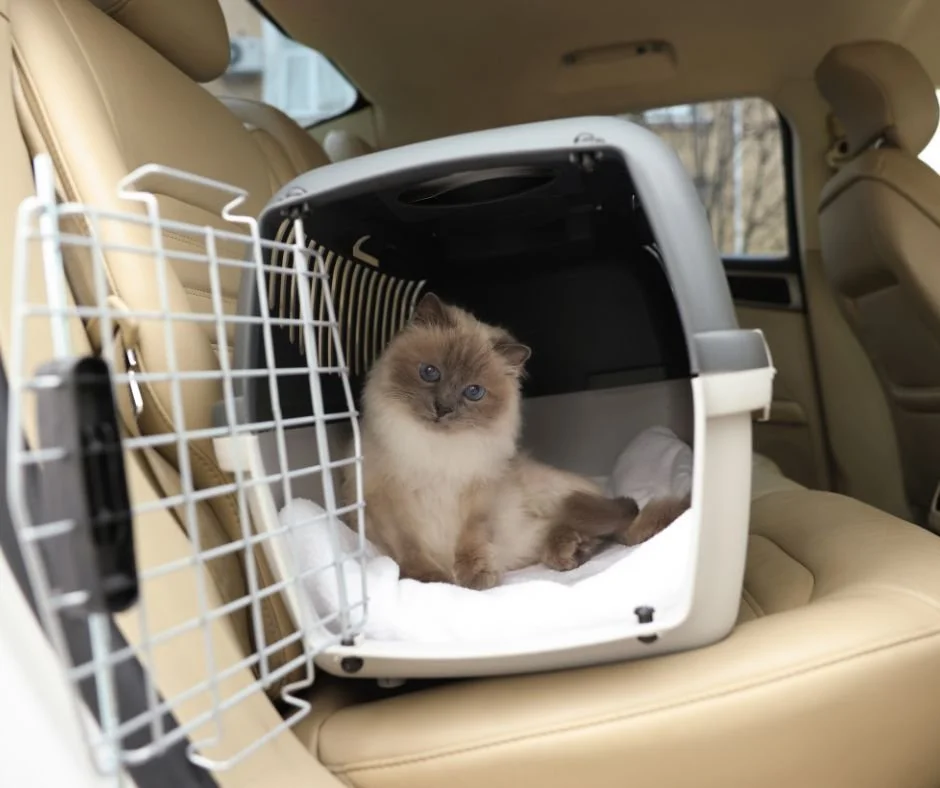
Carrier comfort first
Spend time letting your cat get comfortable and happy in their carrier before you put them in your car.
Are you planning a move across the country with your cat? Are you taking them on a journey? Do you just need to take them a short drive away? Are you dreading their pitiful wails and panicked cries?
What if you could teach your cat to tolerate, dare I say, even enjoy a car ride?
A simple drive to the vet shouldn’t turn into a battle where you come out scratched and bloodied and your cat has deposited their breakfast all over your car seat and is giving you looks that could kill.
Disclosure: As an Amazon Associate, I may earn a small commission on qualifying products, at no extra cost to you, when you follow my links and make a purchase.
Desensitizing Your Cat
Think of it from your cat’s point of view. You pop them in a box. Then you jiggle that box around as you take it and put it inside another box. Then that box makes lots of noises that they don’t recognize. Then the big box jiggles around and suddenly there’s lots of things flashing by them and they’re whole world has vanished from view.
Wow. That’s a lot. It makes a lot more sense that they’d be afraid.
While we spend a lot of time adjusting our dogs to car rides, cats usually get left at home, where they’re most comfortable. We don’t spend a lot of time helping our cats not to be afraid of car rides.
And then the day comes when we need to travel with them.
They’re not prepared. It’s terrifying for them. And they don’t tend to forget it. I know they say cats don’t really hold grudges. Maybe they do and maybe they don’t. But they sure act like it.
What we need to do is slowly desensitize them to all aspects of a car ride, whether it’s a journey across the country, or a simple trip to the groomer.
So, what steps can we take to make our cats comfortable with traveling in cars?
Get Your Cat Used to the Carrier
First of all, your cat should be comfortable with its carrier. Put the carrier out in your living space and leave the doors open so your cat can smell and explore this new contraption.
Add some of your cats bedding and some treats to entice them to check out the interior. Don’t force them inside. The idea is to entice them.
You can try feeding them inside the carrier, leaving the doors open.
The idea is to associate going in the carrier with happy, pleasant experiences only.
Once they are comfortable with going inside the carrier, close the door briefly, at first, and then work up to longer periods. Again, give treats or their meal to reinforce the idea that the carrier is a happy place where good things happen.
Once they are comfortable with the door closed, pick up the carrier and carry it around the house so they can get used to the motion. Short distances can be increased until you can move the carrier anywhere you like with your kitty inside.
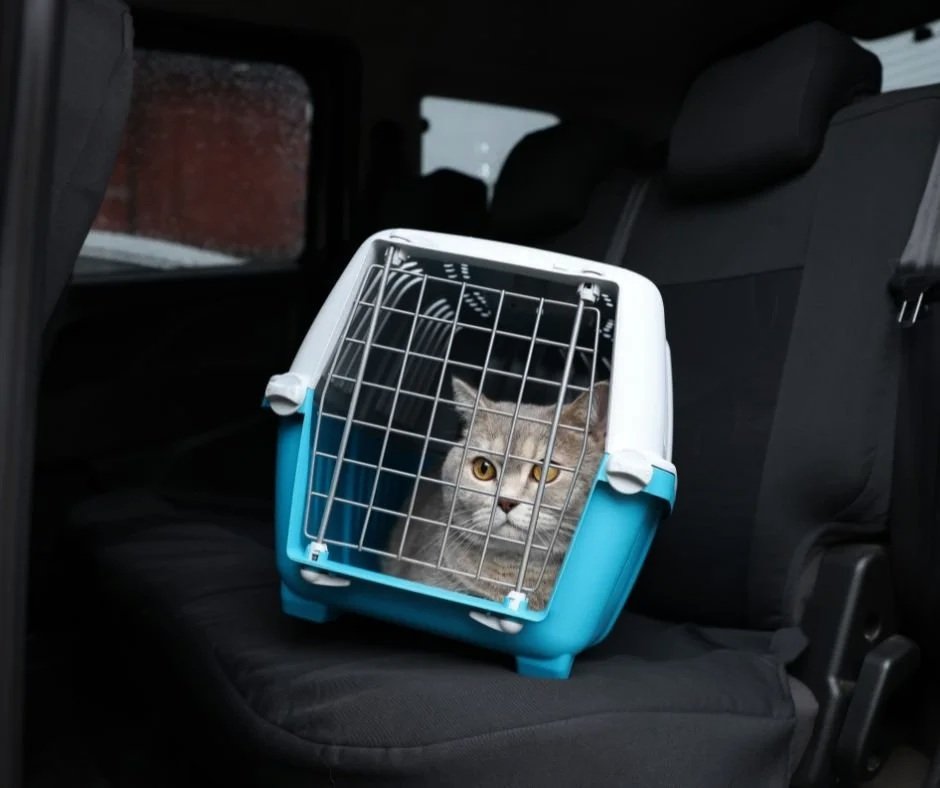
A slow build of confidence
Your cat can slowly be desensitized, step by step, to all the new experiences that going for a car ride will bring them.
Get Your Cat Used to the Car
Now that your cat is comfortable inside the carrier, it’s time to get them used to the car.
You can use a cat pheromone spray to spray the interior of your car and their carrier about 15 minutes beforehand to provide a calming effect in your kitty.
Put your cat in the carrier and bring them out to your vehicle, with no engine running. You can place them where you intend to them to keep them for travel. The safest place is on the floor behind the front passenger seat or buckled onto the seat using the seatbelt through the handle.
Sit with them for several minutes and encourage them or offer treats to provide that positive reinforcement they will need.
Bring them back inside and offer treats as a reward.
Increase this time until you feel they are comfortable just sitting in the car in their carrier.
Get Your Cat Used to Engine Noise
The next step is to start the vehicle engine. Do this once you have taken them out, placed them in the car, and closed the door.
If they appear nervous, you can distract them with the radio or simply sitting and talking to them to reassure them.
Again, you can increase the time slowly. Try occasionally revving the engine a little to mimic the changes in engine noise that they’re likely to hear in your travels. Judge how they’re reacting. Some cats won’t react to the noise at all. Some will need more adjustment.
Now, the real fun begins.
Get Your Cat Used to Motion
Cover carrier with light blanket or towel to block the sight of buildings, trees, and other objects moving past the window as your car is driving. It will also give your cat a feeling of seclusion and safety.
Start with a gentle drive around the block or something of that manner, no more than 5 minutes long. If you can have a second person ride along with you to keep an eye on them for signs of distress, that can be helpful.
When you arrive home, take them back inside and give them a high value treat to reward them and reinforce the positive association.
Continue taking them on rides of increasing lengths until they are fairly confident and comfortable.
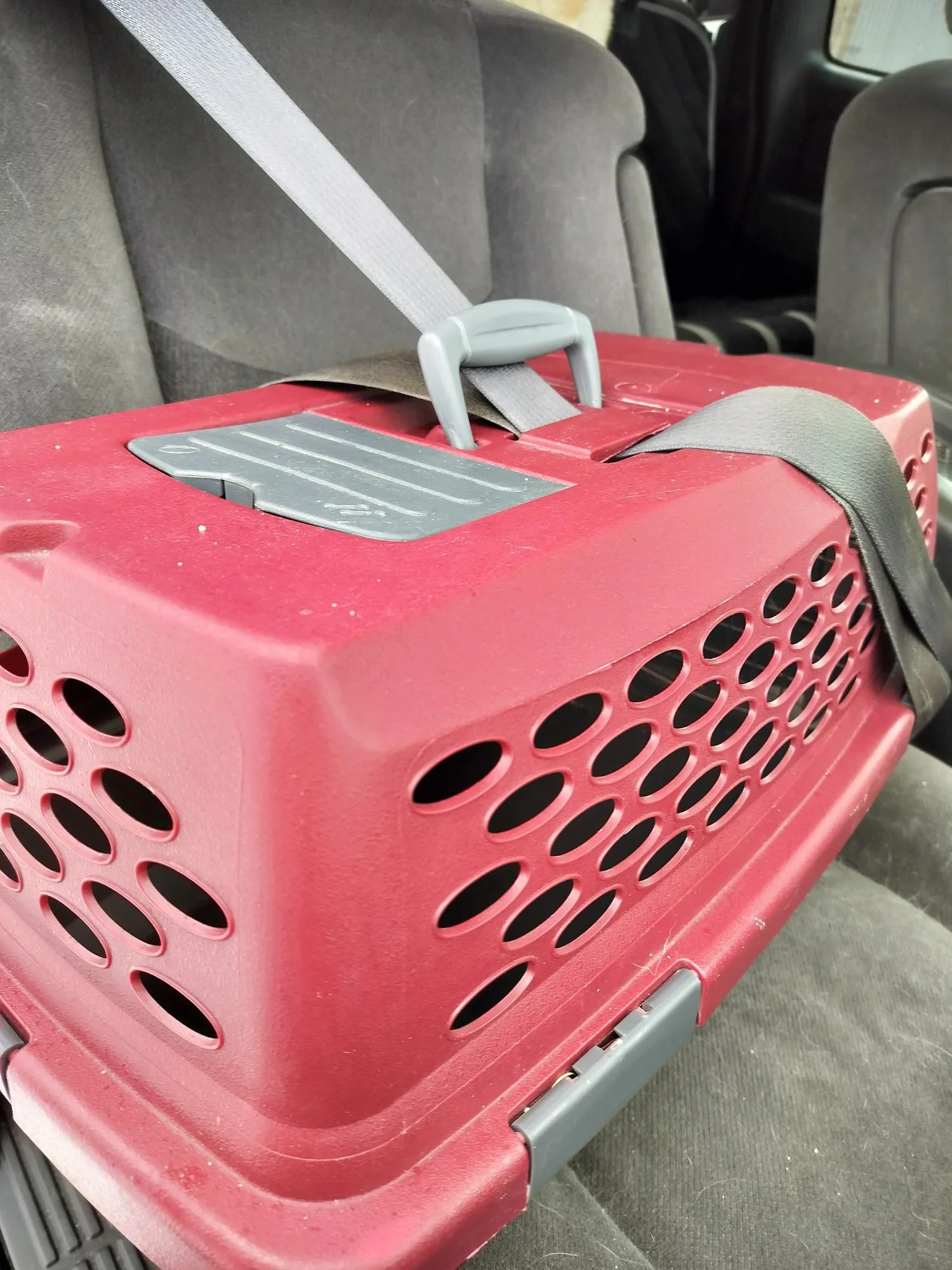
Buckle up for safety!
Practice buckling your carrier into your vehicle, without your cat, to make sure you can make their journey as safe as possible. Some can be strapped in at the handle while some designs have specialized car buckles in their design.
Other Considerations
Take your cat in the car on other trips than just a trip to the vet. Give them other trips that don’t end with another stressful situation. Even if it’s just a short ride, take them consistently to keep their comfort level growing.
If you experience a setback, you may need to drop back a step or two to regain their confidence. But don’t give up on them.
Be prepared for motion sickness or accidents. Cats are prone to vomiting when they are stressed. Bring along a fresh blanket or towel to place in the carrier in case they get sick or have an accident and some pet-safe wipes to clean them and the carrier up a little until you can get them to their destination. Just be careful when you do the switch to make sure your cat doesn’t escape.
Make sure the carrier can be strapped in place for car rides so your cat doesn’t become a projectile in an accident.
Hard sided carriers are the safest and easiest to clean if they do get sick but a soft carrier is a better option than none at all and have the advantage of being easier to carry. They also work if you’re travelling on a plane so they can be stowed under the seat.
If your cat is also harness and leash trained, this can be useful. You can give your cat breaks for long journeys and keep them from escaping when you let them out of the carrier.
Most of these techniques will also work for dogs that are nervous in vehicles. You can desensitize them by slowly building up their tolerance to the fearful emotions they feel during car travel. As a replacement for the cat pheromone spray, you can try a dog calming spray to relax your dog instead.
With a little time, consistency, and patience, you can make your cat much more comfortable and relaxed in your car. They may even come to enjoy their travels, especially if they don’t all end at the vet’s office. So, don’t be afraid to start your cat’s carrier and car training right now!
