
How to Crate Train Your Adult Dog
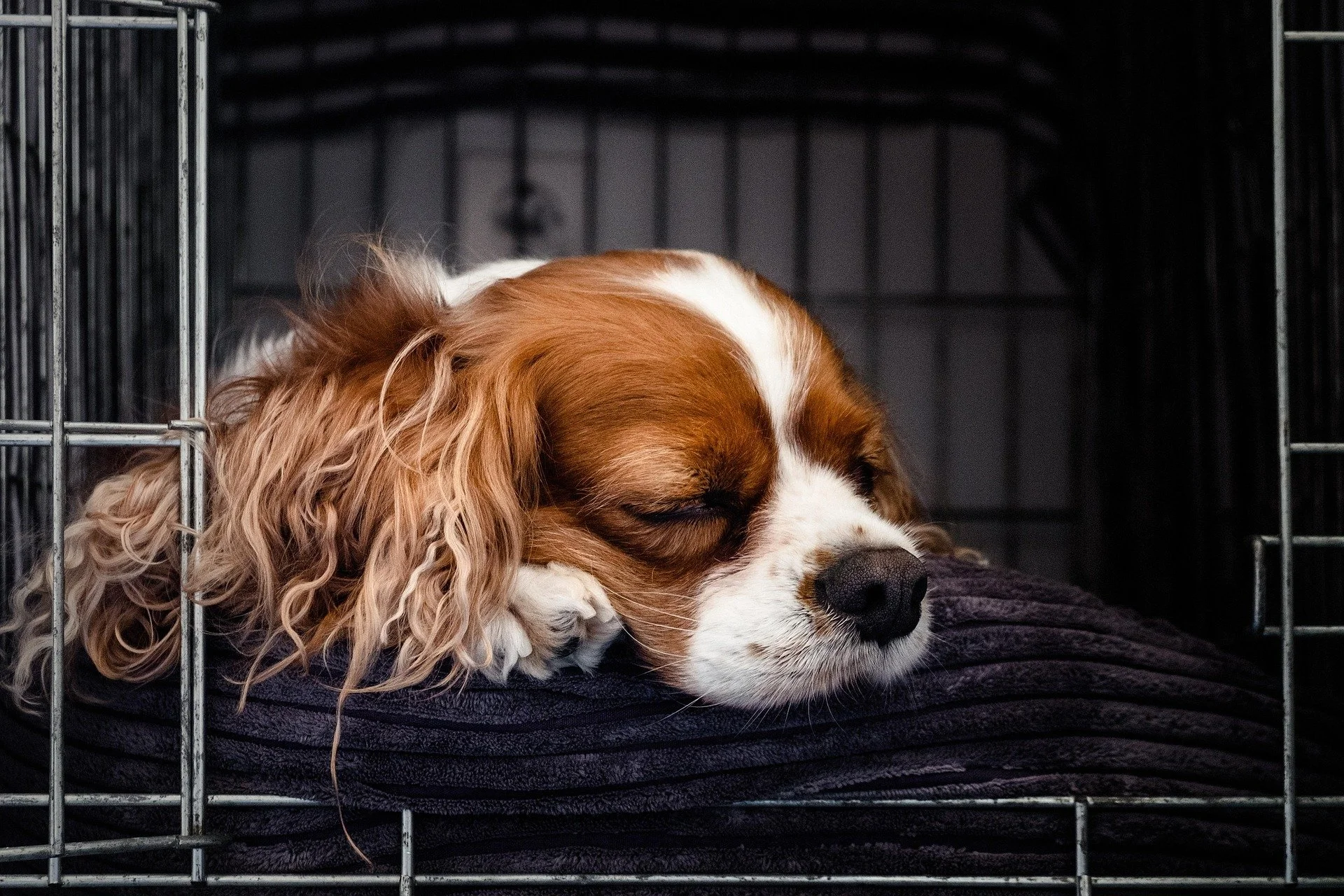
Crate=Den
Give your dog a cozy little nest to catch some zzz’s and relax.
There are a lot of resources for crate training your puppy.
But, did you know that you can crate train dogs of all ages?
This can be especially useful for dogs that are in need of a safe haven in your home due to injury, anxiety, or behavioural issues.
Maybe your dog just needs a little haven in your house of chaos. Maybe you just need your pup to stay out of trouble when you aren’t available to watch them. Maybe your dog needs support while they learn what you expect of them.
A crate can help them and help you.
So, how do you crate train your adult or senior dog so they can have a comfortable, calm space to rest and decompress?
Disclosure: As an Amazon Associate, I may earn a small commission on qualifying products, at no extra cost to you, when you follow my links and make a purchase.
Benefits of Crate Training for Adult Dogs
There are several benefits of crate training for older dogs. While some of these benefits overlap with puppy crate training, the focus of these benefits can be slightly different.
Your focus for puppies is to make the crate fun, inviting, and positive.
Your focus with adult dogs is to give them a safe haven, a soft and comfortable space to rest and decompress.
Safety and Security
A crate can provide your adult dog with a safe place to relax. If you have a dog that has anxiety and becomes overstimulated, a quiet den can give them a secure place to wind down and chill.
It’s a space that’s just for them in busy households when they need a break.
This can especially benefit senior dogs or rescue dogs that are unaccustomed to the hustle and bustle of family life.
Prevents Destruction and Injury
Eating your couch cushions isn’t just bad for your home decor, it could be potentially dangerous to your dog. Having a crate to keep your dog out of trouble can, quite literally save your house and your dog.
The destruction abilities of a dog can start as something small and turn into an all out frenzy. Getting into garbage cans, eating your shoes, destroying furniture.
This can all be avoided by keeping your dog away from the temptations and the dangers in the first place.
Emergency Management and Recovery
If your dog sustains an injury, needs surgery, or gets sick, having a spot to rest and recover in peace can be invaluable.
If your pup needs to have their movement restricted, what better place than their own private space at home? If they’re in pain or not feeling well, a comfortable bed and some peace is just what the doctor ordered.
House Training Support
Crate training can certainly be useful for potty training because dogs don’t like to do their business where they sleep.
While we think of puppies when it comes to house training, some adult dogs also need extra support and training.
Some of our dogs are rescue dogs or simply dogs that were raised outdoors and had no experience with house training.
Having a crate to spend some of their time can help reinforce house training even for short periods when you aren’t available to watch them. This can give them structure and build their confidence in their home.
While senior dogs can also be kept safe from having accidents in your house when you can’t watch them, keep in mind that senior dog accidents may be caused by medical issues or simply age-related decline.
They should never be punished for accidents, especially in their crates, if you want to continue with a dog who’s happy in their crate.
A visit to your veterinarian is a good idea to rule out medical reasons for recurring accidents in your home.
Safe Travel
If you take your dog on vacations, crate training may not just make travel easier, it may be necessary.
Air travel requires your dog in a crate, a crate in the car is safer, and even some hotels require your dog to be in a crate if you leave them in the room.
Also, if you have an emergency and need to evacuate, crate training can be very helpful.
Getting your pup out of harm’s way and keeping them in a safe place can be much easier when you can keep them contained in their crate where they can be comfortable and feel more secure.
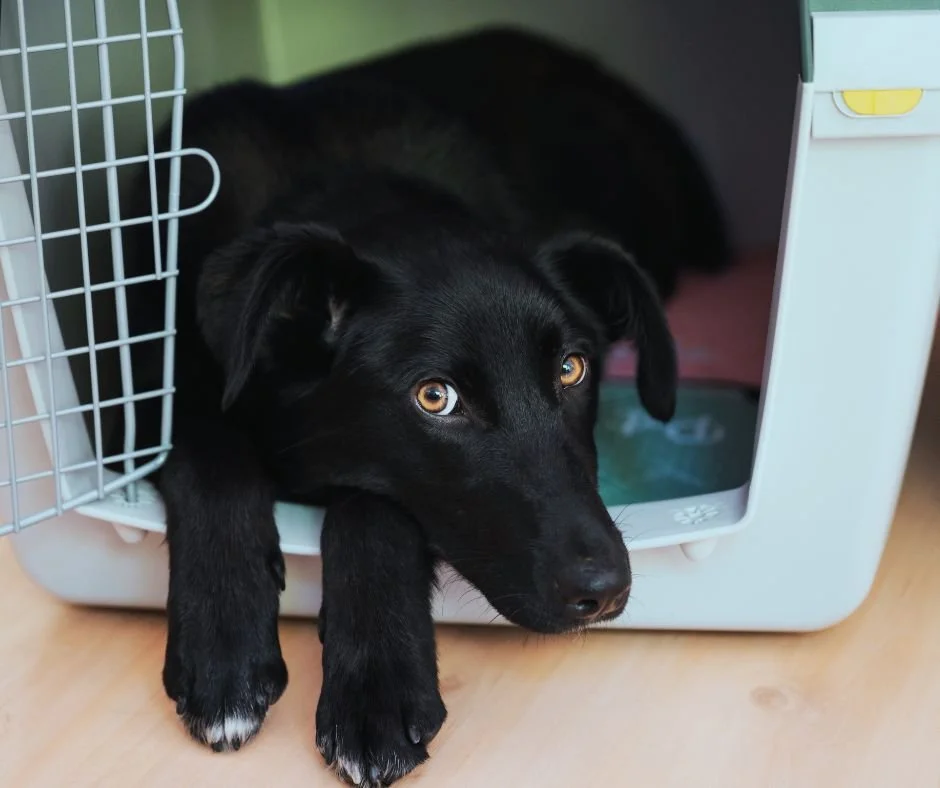
Rest and Recovery
When your dog needs to remain quiet and recover from injury or illness, having a spot where they are comfortable to recoup in peace can be invaluable.
Considerations for Crate Training Adult Dogs
There are a few issues that you should keep in mind to keep your crate training goals on track:
Puppy vs Adult Crate Training
If you have ever crate trained a puppy, you may find adult training a little different.
When you have a puppy, you are focused on forming habits and building their bladder control. Puppies have very little in the way of pre-conceived ideas or notions about potty training and will usually learn quickly.
In comparison, an adult dog not only needs to form the new habits you’re teaching them, but also break old habits. If you have an adult dog who has never been house trained, this can be a bit of a challenge but they’re certainly capable of learning.
The basic rule of thumb is that a puppy can hold their bladder for about an hour for each month of their age.
Healthy adult dogs can hold their bladder up to 8-9 hours at a time but it may take time for them to learn.
Even though they can control their bladder for an extended period of time, don’t set them up for failure. Build their time in their crate slowly so they can adjust and know what’s expected of them.
Also, keep in mind that some rescue dogs will have very negative connections with a crate. You will need to overcome those feelings if you want your dog to feel safe and secure in a crate.
It’s certainly possible, but understand that it can be more of a challenge. Patience with adult dogs is key.
Reward vs Punishment
Your dog’s crate should never be treated as puppy prison. It should be more of a cozy, inviting bedroom, just for them.
NEVER use your crate as a punishment! You want your dog to WANT to be in their crate.
Yelling at them and forcing them into their crate is only going to reinforce negative associations with the crate. That’s the last thing you want if you want a co-operative pup.
For instance, if your dog is getting overly worked up and needs a little bit of a time-out, calmly command them to their crate, keep your tone light and happy, not angry. Keep it positive so your dog does too!
Crate Size
Choose a crate that is the right size for your dog. If you want your dog to like being in the crate, you need a crate that is comfortable for your dog.
They need to be able to get up and turn around in the crate. This is vital for a dog with arthritis or an injury that needs to move around to keep their bodies from getting stiff. But, really, it’s important for any dog to feel comfortable in their space.
You also need the crate to be small enough for your dog. If it’s too big, the dog could make “a mess” in one end of the crate and sleep in the opposite end.
Also, they could have the ability to move around way too much, get themselves worked up into a frenzy and possibly hurting themselves.
So, think about it like Goldilocks. You need the crate that is just right!
Comfort and Calm
Your dog’s crate should be in a quiet, temperature-controlled part of a frequently used room such as a living room or bedroom. Your dog is less likely to react poorly to being crated if they can still feel a part of the family but it shouldn’t be in a high-traffic area such as the kitchen so your dog can have some peace and quiet in their crate.
To make the crate feel more den-like, you can place it in a corner and cover the top with a blanket or towel. This will give your dog a cozy space to feel at home.
You can also use unused spaces like under a desk or use a furniture-style crate that can double as a side table or other furniture piece.
Patience is Key
When training an adult dog, especially, patience will help you and your pup. Your adult dog may have to undo a lifetime of learned behaviours. They will need to be given empathy and understanding. Dogs want to please you but it takes time to teach them what you expect of them.
Positive Command
Choose a word as a command word for your dog to enter their crate such as “kennel” or “crate”. Use the command in a positive, calm tone to encourage your pet. Again, you’re trying to make them want to be in the crate. Words said in anger could then be associated with a negative feeling towards the crate and could cause you more troubles down the road.
The goal is to have a dog that hears the command and instantly thinks of the a treat, praise from their person, and a some time to relax in their little den.
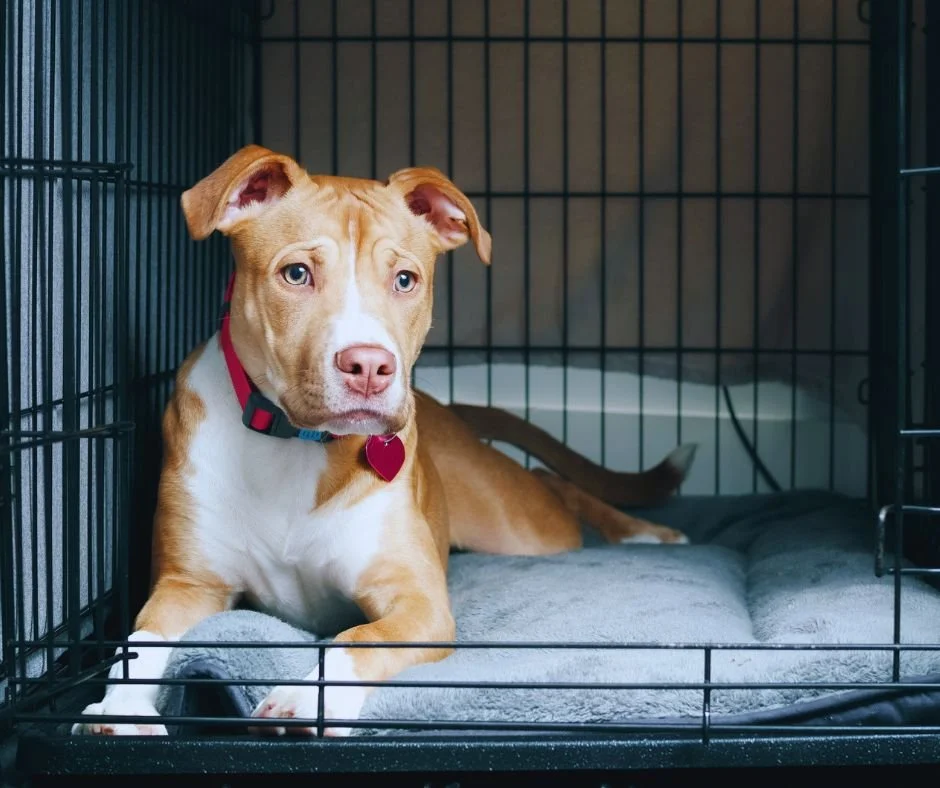
Your Dog’s Own Space
The goal for any dog is a crate that your dog wants to enter and be calm. For your adult dog, it can be a place to decompress.
How to Train an Adult Dog
Remember, your goal, whether training a puppy, an adult, or a senior dog, is for them to WANT to go in their crate.
For a puppy, it’s a positive and fun place where they get to have a little treat and maybe get some shut-eye.
For an adult, it’s a place to hang out and relax.
For a senior or anxious dog, it may be a place to rest and find calm.
So, while your approach is similar, keep the end goal in mind for your particular pup.
Make the Introductions
Set up your crate, leave the door open and let your dog explore it on their own at first. Put in their favourite blanket or bed inside, maybe a favourite toy to catch their interest. Give them a little time to get used to the crate and see if they will enter it on their own. If they’re very resistant to the crate, you may need to give them more time to get used to it in the room before you try to get them inside. Don’t force the issue.
Reward and Encourage
Once your dog is relaxed around the crate, throw a high-value treat or two into the crate and encourage them to go inside. You may have to throw the treat deeper into the crate to get them to enter all the way. Don’t close the door or force them to stay inside. Let them explore the crate and come out at their own pace. Give them lots of praise and encouragement.
Continue to use the treats to encourage them to enter and explore the crate. Be sure to use your command word just before they enter so they begin to associate the command with going in the crate and with a reward for doing so.
You may find that, at first, they bring the treat back out of the crate. Don’t take it away from them or chastise them. Just try again later until you find that they will stay in the crate to eat their treat and praise them for doing so.
To continue the process, you can feed them their meals in the crate to give them more time and an even more positive association.
Time to Close the Door…Briefly
Once your dog is comfortable eating meals in the crate, you can close the door with them inside. Do this briefly while they eat and open again before they begin to whine or bark.
Ideally, they’ll be so distracted by their meal that they’ll barely notice.
If they leave their meal to escape, open the door immediately but leave the meal inside so they go back inside and leave them to eat in peace. Try again the next meal.
Remember, always be patient and positive.
Practice, Practice, Practice
Work with your dog often, giving lots of praise and try to get up to 5 to10 minutes at a time of being in the crate with the door closed without you being right next to the crate. Even if they’re not ready for you to leave the room, try to sit away from the crate and, eventually, just out of sight, if possible.
If you find feeding a meal isn’t enough time, try a different feeding method. Lucy can inhale her supper in less than a minute so a regular meal isn’t much of a distraction for her, though it does seem to be a very positive experience for her. Ahhh, Labs.
You can use an puzzle feeder or a stuffed Kong toy to extend their feeding time in the crate. Often, they will be distracted enough that you can move away from the crate for a while and let them focus on relaxing and eating in their own personal space.
You need to slowly extend both the time they’re in the crate, and the time you’re away from it. If they can only stay calm in the crate if you’re next to them, that hardly fits the purpose. Work towards stepping away from the crate and then out of the room for brief periods.
Eventually, you can extend that time to a dog that simply goes in the crate, enjoys a snack, and relaxes while you go about your day.
Expect Some Setbacks
When it comes to puppy crate training, there will be setbacks. You can also expect this with adult dogs, and maybe even more as they may have prior bad experiences that need to be overcome.
If necessary, you can drop the practice lesson and try again later that day or the next day.
But you may also need to go back a step or two in the training to see where you can find a comfortable entry point for your pup.
They may need this step back to gain their confidence in you and in themselves. Be patient and find what works for your dog.
Try to ignore attention-seeking behaviour such as whining or crying. If their needs have been met, such as a bathroom break beforehand, you know that they are merely trying to make you feel guilty.
However, leaving them to go into a full panicked melt-down is also not going to help your case either. This is why you need to build up slowly and take steps back when necessary.
Most dogs, of any age, can be taught that their crate is a happy and calm place, a little den for them to retreat to when they need a safe and comfortable haven. It just takes a little work, a lot of positivity, and even more patience.
But, after all, a happy, safe, and comfortable pup makes it all worthwhile!
