
Winter Pet Safety Tips
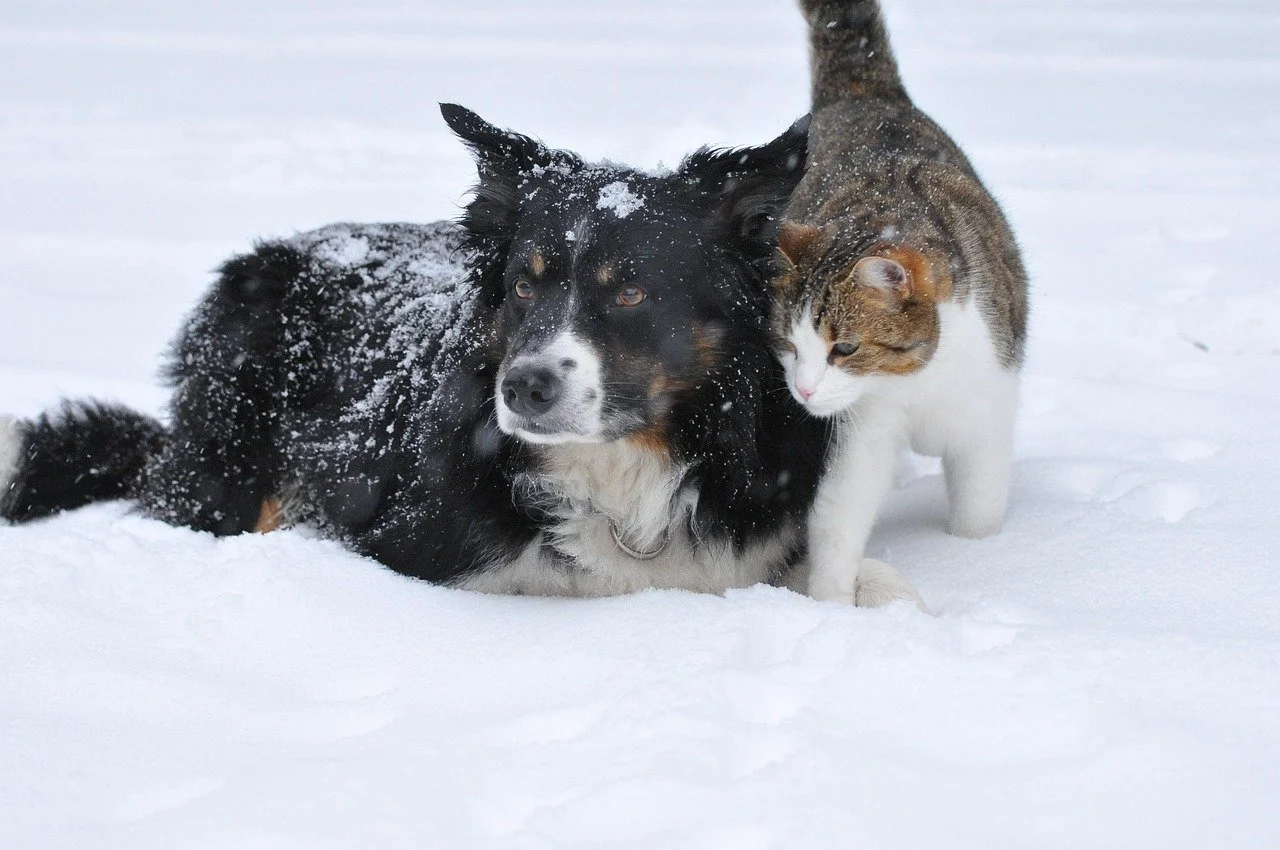
Winter Pet Safety
Our harsh winters can create danger for even our hardiest pets
The past few days have been blustery and miserable in this neck of the woods. We went from snow, graupel, ice pellets, and freezing rain to heavy snow, dropping temperatures and high winds as snowsqualls moved in off the Great Lakes and created havoc on the roads. And once that snow machine started, it doesn’t want to stop.
I’ve been listening to the wind groaning through the forest across the road, watching it carve ever-changing patterns in the drifts outside our windows, and waiting, with bated breath, while the lights flicker and decide whether to stay on or not. We’ve been lucky to have only a few minutes out here and there but our generator is ready to go if we need it.
It has me thinking about any extra steps that we need to take for our fur family to keep them safe.
Hunter the Cat, is an indoor cat. He has never known the sharp sting of cold on his paws and ears. I plan on keeping it that way.
He is safe from Winter’s dangers. But I’ve had plenty of barn cats in my life and I remember that even they needed some extra help to stay warm and dry in the stormy winters of my youth.
Lucy the Lab loves the snow. She lives indoors but loves to wander and play in the snow. Nose-diving into the fluffy white piles is a special joy for her. Her double-layered and water-resistant coat protects her. But we keep her time outside limited in the extreme cold or stormy weather. Let’s face it, she leads a pampered life and wouldn’t exactly thrive in the wild and wooly Winter weather for long periods of time.
You, too, can protect your furry companions from the hazards of Winter and keep them safe. Let’s talk about the dangers for your pets and how you can keep them safe and cozy during the frigid days ahead.
Disclosure: As an Amazon Associate, I may earn a small commission on qualifying products that I recommend, at no extra cost to you, when you follow my links and make a purchase.

Double Coated Breeds
While cat breeds like Maine Coons, Russian Blues, Persians and Ragdolls have thick and water resistant coats to protect them, even the most hardy cat needs some protection from the extreme cold and snowy weather common to a Canadian winter
Limit Pet Time Outdoors
When the weather outside is frightful, it’s time to be more mindful of the time your furry companions remain outside.
The basic rule is, if it’s too cold for you, it’s too cold for them. But it becomes a little more complicated with the breed, size, age, and fur structure of your pet.
A large Labrador Retriever, Newfoundland Dog or Siberian Husky, with their dense undercoats and water-repelling outer coat is going to be more tolerant than a tiny Chihuahua or even a larger Greyhound or Bulldog with their thin, short coats. These breeds may need the extra protection of a coat we make them wear on their walks and potty breaks.
This same theory can apply to your cat. There are breeds, such as the Maine Coon, Norwegian Forest Cat, Scottish Fold, Russian Blue, Ragdoll, or Persian, that have coats that are double or even triple layered. Some have tufted ears and paws to protect them from frostbite. But all cats need to be protected in harsh weather.
The age of your pet can also affect their tolerance of the cold. Young or senior pets are the most vulnerable. With health issues, such as arthritis, older pets may need to be limited in their time outdoors even more.
When the temperatures plummet and the winds howl, frostbite can be a real concern for your pets. Ears, nose, tails, and paw pads are especially vulnerable.
Watch for signs that your pets need to be inside or in a protected area. Shivering, whining, holding paws up, and reluctance to walk are sure signs that your dog is suffering. It’s a little more difficult to assess cats for early symptoms. They may hold their paws up or pin their ears back.
Checking their skin in vulnerable areas for discolouration is a good practice. Frostbite can occur quickly so make sure your pet has limited time outdoors and is brought inside to warm up, even in moderately cold weather.
Hypothermia is also a hazard for pets. Cats and small dogs are especially at risk. The average temperature of your pet is higher than humans at 37.7 to 39.2°C(100 to 102.5°F). When their internal temperature drops below this range, they are in immediate danger of developing hypothermia.
Symptoms include shivering or shaking, hunched posture with a tucked tail, whining, reluctance to move, lethargy and lifting paws off the ground. Seeking shelter and warmth for your pet at this point is not just a good idea, but vital for their safety.
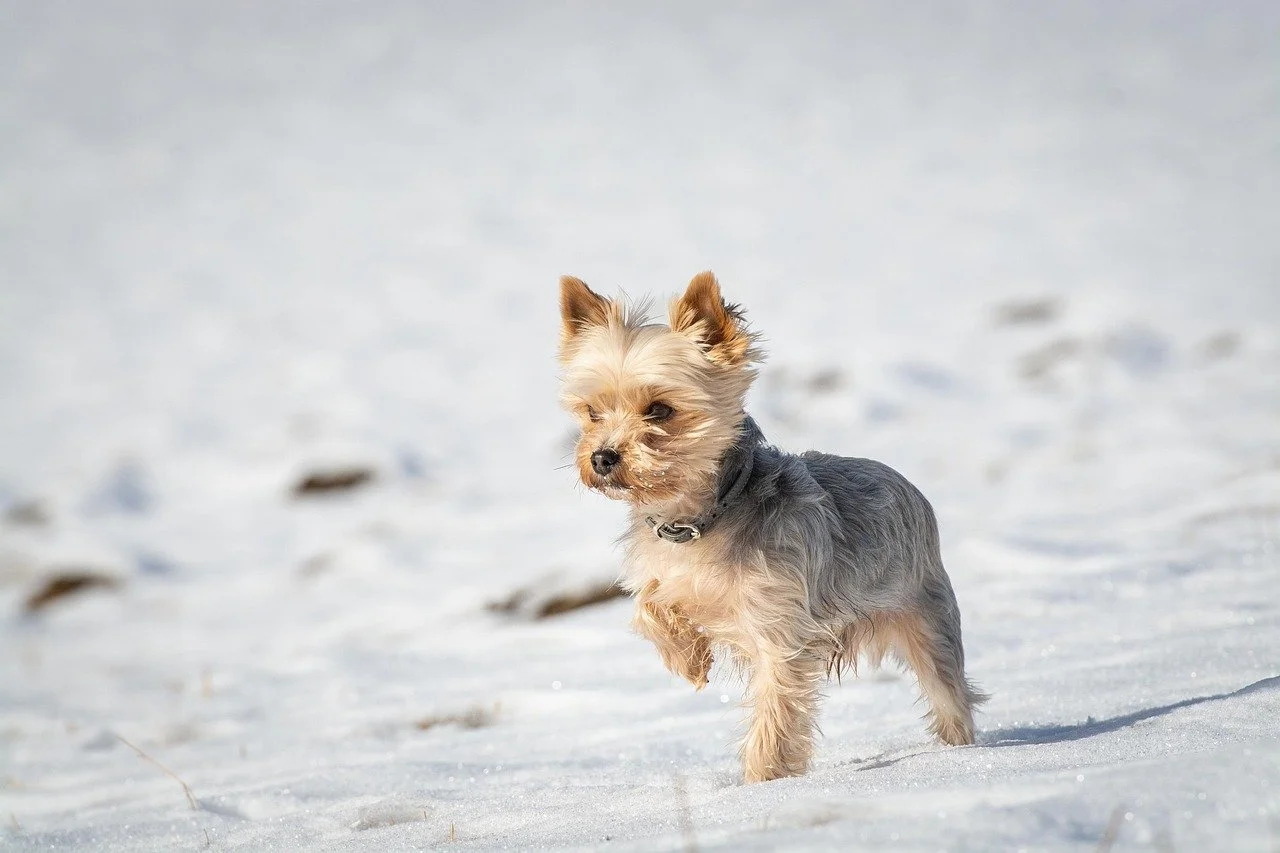
Protect those paws!
Ice and snow can build up between your pet’s toes, salt can burn their skin, and frostbite can injure their paws, noses, and ears.
How to Protect the Paws
Your dog can walk in the snow for about 15 to 30 minutes at a time in freezing weather, but this will vary by breed, coat, and the actual temperature. Though larger breeds with double coats have paws more suited to cold weather, all dogs are at risk of frostbite and paw damage.
For winter walks, keep them shorter than normal and check their paw pads for redness, cracks or ice build-up. If ice between their toes becomes a problem, trimming the hair between their toes can assist with this issue.
Cats are also susceptible to paw damage and frostbite so care must be taken to prevent this.
Training your pets to wear booties can take a little time and patience but, especially for those who suffer from sore paws in the winter, well worth the effort.
Another protection for paws in cold weather is paw balm such as this Born to Run balm, made in Canada and formulated to protect paws against snow, ice, salt and other de-icers. It can also be used on rough terrain, in hot weather on warm pavement(no balm can completely protect against truly hot pavement), conditioning the paw pads to help heal and protect dry, cracked skin.
Paws should also be wiped when you get home to remove any salt or de-icer caught between their toes and remove any harmful residues. A pet-safe wipe, such as Earth Rated pet wipes can be kept at your home entrance to quickly clean your pet’s paws. They can also be used to wipe their furry undersides to remove any salt splash.
If their paws need a more thorough clean, a Mud Buster paw cleaner can be used to rinse and clean your dog’s paws. These products can be used year-round to remove salt residue, mud, sand, dirt, pebbles, and pollen.
The Dangers of Anti-freeze and De-Icer to Your Pets
In general, automotive fluids are toxic and dangerous for our pets. Anti-freeze, in particular, in most formations is toxic and often sweet tasting to tempt our curious furry friends. Even products that are supposed to be safer for pets do contain harmful chemical that are not safe for ingestion.
Windshield washer fluid also contains toxic chemicals. I don’t know about you but I need to refill my windshield washer fluid several times each winter. (Okay, to be truthful here, my hubby is usually the one to fill up the washer fluid. But he does clean up any spills he makes too).
Lucy loves to wander in the shop to see what you’re up to so keeping the floor clear of toxic chemicals for her to track through is of the highest priority.
We wouldn’t want to leave any fluids laying around for random visits from local farm cats or other animals who would be at risk. Safety first!
If possible, the de-icers around your home should be pet-safe options too. Obviously, we can’t always control all the areas our pets access every day but we can minimize their risk.
Paws and furry undersides can be wiped to rinse away any residue when they come back inside after a roam through the neighbourhood or along the roadside.
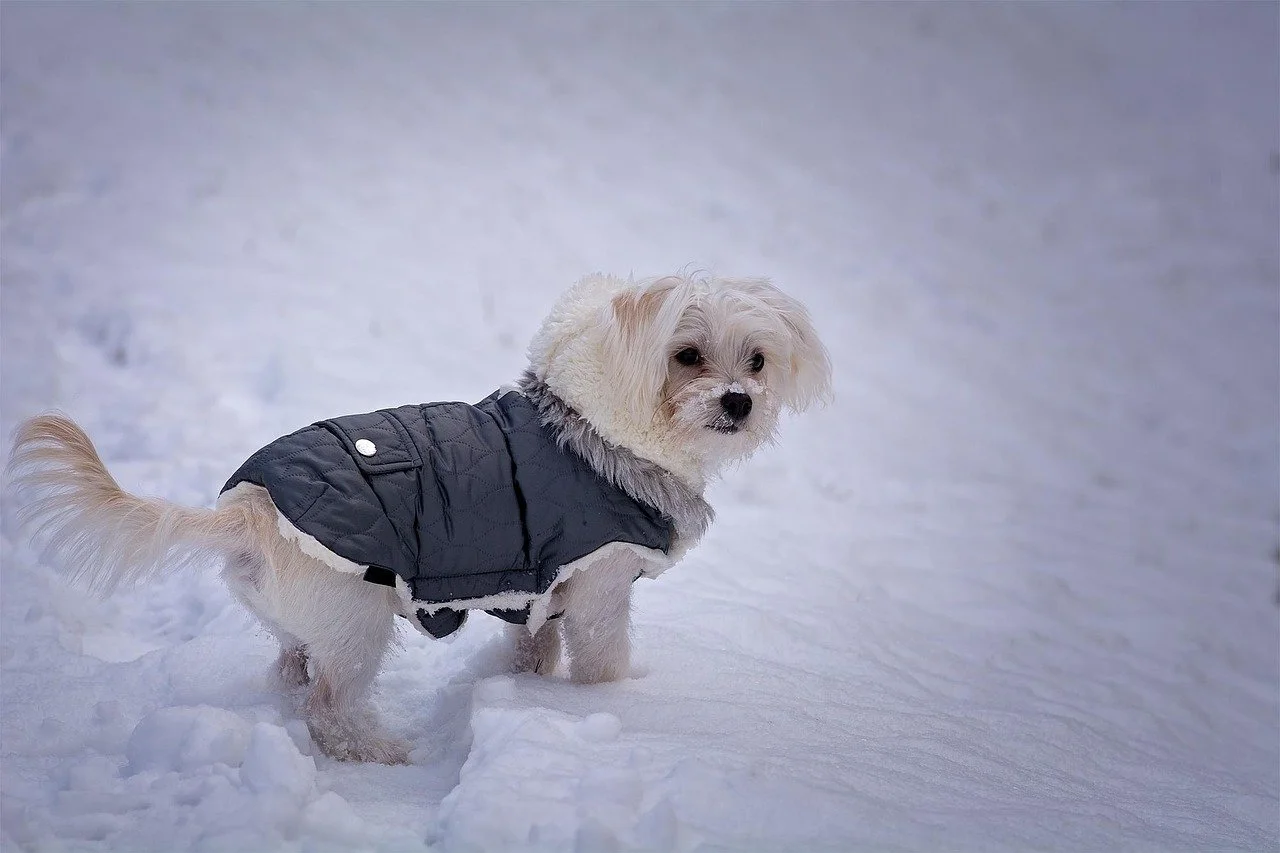
Wet Fur=Cold Pet
Keep your pet dry to keep them warmer. For some, this can mean a coat and boots to protect them, especially pets that are smaller or have thin fur.
Keep Your Pet’s Fur Dry
Wet fur is equal to a cold pet. When fur becomes drenched, its insulating properties are destroyed. So, when bathing pets in the winter, their fur should be completely dried before they are able to go outside in the cold.
A well-fitting pet coat can be used to keep snow from building up on their fur and melting. If your pet has thin fur, using an insulated and water-resistant pet coat can help them stay warm on their walks and romps in wintry weather. Double-layered pets may not need this protection but you should assess your own pet. If they are shivering or suffering, they may need some kind of extra warmth layer.
Keep in mind that if the pet coat itself gets too wet, it will no longer protect and may actually make things worse. So, choosing a waterproof or water resistant coat is a great idea.
Regular brushing should be done to minimize matting. Matted fur has reduced insulating abilities and traps moisture next to their skin.
It may be necessary to remove mats but cutting your pet’s hair short in cold weather is not a good idea. A trim of the paw pads and underbelly if your pet collects snow and ice balls may be necessary but a full shave will take away their protective coat.
Vehicle Danger to Cats
When cats are outside for any length of time, they may seek refuge in the warmth of a car engine. It’s a good habit to give your hood a knock to scare out any intruders from your engine compartment.
Maybe your cat stays indoors like mine. But if a neighbourhood cat is allowed to wander outside and decides to climb into an engine compartment, a little honk may be the easiest way to scare them out of harm’s way.
If you’re really concerned, or hear something, pop the hood to ensure there’s no animal inside.
They may also hide in wheel wells or simply under your car so a quick peek is a good idea. When you’re brushing snow off your car or scraping ice, this is a good opportunity to chase out any animals for their own protection.
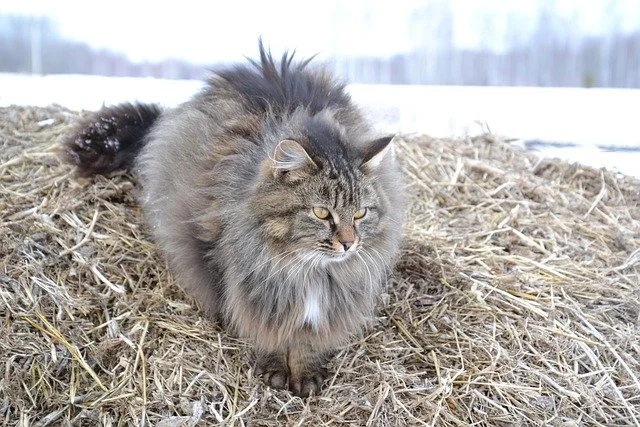
Straw is a great bedding for outdoor shelters
Straw is your best bet for insulating dog houses, cat shelters, etc. for animals that remain outside in the winter. Even an animal that is accustomed to outdoor weather will need the protection of an indoor space in harsh Canadian winters.
Outdoor Shelter for Pets
If you have animals that stay outside, such as feral cats in your care, barn cats, or farm dogs, they still need to be provided with a warm, safe place to sleep or take shelter.
Shelter boxes or dog houses should be filled with straw (not hay) to provide a warm, comfortable space. Blankets and towels can easily become wet and make the animal wet or even freeze and stick to their fur. Pine or cedar shavings can also be used but are not quite as effective as straw but will last longer.
Ensure that the entrance to the shelter is not drifted in or blocked in any way so the animals are able to access the shelter at any time. A build-up of ice and snow can cut off their access so be sure to check it often.
Also, fresh water is absolutely vital to your pets. In extreme cold, you may need to check their water dish often to ensure it hasn’t frozen. Alternatively, you can invest in a heated water bowl such as this bowl to ensure your pets have access to water at all times. Just remember to clean and fill it often.
Keep Your Pet Safe Near Water in Winter
While you may understand that the stream beside your walking path is not another pathway, or the mostly frozen lake you hike by is not an open field, your dog may not know the difference. Even lakes that have frozen completely can have ice shifts in high winds that form cracks that can be covered over quickly by drifting snow.
Keep your dogs on leash or, at the very least, within your sights and well under control to prevent any dangers of falling through the ice. Even if your dog is lucky enough not to fall in completely, getting their paws soaked when away from home could cause frostbite or even hypothermia. An on-leash dog will keep them on the right path and away from danger.

Boredom Busters for Your Pet
When the weather is just too nasty for your pets to be outside for any length of time, they may need some entertainment to keep them from being bored. A bored pet can be destructive, anxious, and even depressed. So, check out this article for some simple solutions for your pets during nasty winter weather.
Keep Pets Inside During Winter Storms and Extreme Cold
Keep in mind that a pet can wander and get lost in the snow. Your cat’s neighbourhood prowl route may become unfamiliar with shifting snow drifts and piles, burying familiar surroundings under a blanket of white.
They may become disoriented and confused by a lack of familiar smells as well, blocked by that same blanket of snow.
Pets can become cold quickly and seek shelter away from home in an unfamiliar and dangerous place.
If the weather is really stormy, your pets may have to be kept indoors for a while. There are times when, except for potty breaks, your pet will be need to stay inside for their own protection.
If they’re not used to being inside, you may have to barricade them to one area of your house to prevent them from getting into harm’s way or exploring your kitchen cupboards when your back is turned.
Even house pets may go a little stir crazy and need some extra attention in the Winter. A bored pet can be a destructive pet. Providing them with puzzles and toys, doing training exercises or playing games with your pet can keep them entertained and out of trouble. Check out my article on Boredom Busters for Pets for some ideas on keeping your pet happy when the weather is unsafe for them outside.
While they may not appreciate or understand what you’re doing for them, it’s up to you to protect them when Winter dishes out its worst. You can be secure in the knowledge that you’re doing it for their own good!
