
Tips for a Healthy Pet and a Healthy Budget

Pet Care on a Budget
You CAN provide proper care for your pets and still save some money. A little creativity and a little work can keep your pet and bank account healthy and happy.
It’s official. We adore our furry little friends.
About 58% of Canadian households have pets. We spend almost $10 billion a year on our pets. That’s between $1000 to $4000 per year to care for each of them, depending on species, breed, and age.
But, let’s face it, times are tough.
That shouldn’t mean that our pets have to suffer. We know that we need to give them proper nutrition and care. And we have to be prepared for surprise expenses. But we also want to spoil them a little, here and there, right?
So, how do we save some money but give our pets the wonderful life they deserve?
Disclosure: As an Amazon Associate, I may earn a small commission on qualifying products that I recommend, at no extra cost to you, when you follow my links and make a purchase.
Opt to Adopt
A great place to start with budgeting for pet ownership is opting to adopt a pet from a rescue or shelter. So many wonderful pets, through no fault of their own, are sitting in shelters, waiting for a home. More are in foster care to help shelters and rescues, bursting at the seams.
These pets are not free but if you consider the fact that animals are often vetted, spayed or neutered, vaccinated, dewormed, and sometimes microchipped, you are usually not even covering their costs.
Programs are often run through humane societies or municipal animal services to provide lower cost spaying and neutering, rabies vaccinations, or microchipping for pets in your current care.
If you are set on a particular breed of dog or cat, be sure to purchase through a reputable, well-established breeder so the parents and puppies are health-tested by a vet, dewormed, microchipped, and have received their age-appropriate vaccinations.
Sometimes life just puts furry friends in our laps and I’m one to believe that happens for a reason.
Both Piper and Lucy came to us from a guide dog training service as career change dogs who had gone through all their puppy training and socialization but weren’t able to become service dogs. Piper was “too hyper”. Lucy was “too vocal and strong-willed”.
The standards for these dogs are high. Yes, Piper had high energy but she was a young Lab and big, even for a Lab, especially a female. She was a handful when she got excited but so much fun.
It was ages before Lucy even made a peep and that was only when playing or letting us know she needed outside. She has a mind of her own but she’s a sweet, well-behaved dog.
While they weren’t suitable as service dogs, they were perfect companions for us.
Jack came to us from a family who needed to rehome him. He was well-trained, smarter than any dog I’ve ever had, as sweet as could be, but very high energy. He was too much for a home with a small child and another on the way. But, again, he was perfect for us.
Our cats, Timmins and Hunter, both came to us as kittens from farms. While this can be a little risky as you don’t know their health background, they both turned out to be healthy and strong cats with a lifetime of love to give.
An Ounce of Prevention…
You know how that saying goes…
“An ounce of prevention is worth a pound of cures”.
Benjamin Franklin may have been talking about fire safety in Philadelphia but the saying really does apply in a lot of areas.
One of those areas is with the health of your pet.
A healthy pet is less expensive than a sick pet with less vet appointments, no specialty diets, and no medications.
There are many things you can do that will keep your pet healthy, costing you less in the long run.
Exercise
Giving your pets the exercise they need will go a long way to keeping them healthy and happy.
Exercise provides so many benefits such as weight control, stronger muscles, better heart health, mental stimulation, decreased anxiety, improved sleep, and reduced destructive behaviours.
When Piper didn’t get enough exercise, she was destructive. She knocked a thermostat off the wall and chewed it to bits. She ripped wallpaper off the wall (I hated that wallpaper anyway). She jumped through a glass window…twice. She never ended up needing vet care but, suffice to say, we were very lucky. But it did cost us to replace the thermostat and fix the window(did I mention TWICE??).
Obviously, she needed more exercise. Lesson learned.
Nutrition
Feeding your pet is going to be one of the higher expenses for your pet. We are learning that feeding our pets a good quality food and healthy treats has a positive effect on their overall health. Products containing real protein sources, appropriate high-quality carbohydrates and fats, less fillers and no artificial flavours or colours are going to keep your pet in optimal condition.
Sometimes, this takes a little research. Talk to your veterinarian. They can recommend specific foods for you but I would suggest not purchasing dog food at your vet clinic if you’re trying to save money. Even special diet foods can usually be sourced at a more affordable price than your local clinic can offer you.
Your vet may also offer you guidance in what to look for in a good pet food. Knowing what ingredients to look for can help you in your quest for a healthy but affordable food for your pet.
You may even be able to find a store brand food or treat that fills your needs.
Lucy happens to be thriving on Kirkland Signature dog food from Costco. She loves the taste, she’s healthy, and my vet approves it.
Hunter eats Kirkland Signature dry cat food and Nutrience Infusion wet cat food. This combination serves his needs well and it works for my budget.
The point is, you don’t need to feel that you have to buy the most expensive food in the store. There are healthier options to suit most budgets.
Speaking of healthy food, be sure you’re not overfeeding your pet at meals and treat times. I know. They’re cute and it’s so tempting to give them just one more.
I get it.
I have had Labs most of my life.
Labs will, quite literally, eat themselves to death and love every minute of it.
You’re the pet parent. You can’t let that happen.
Dental Care
Taking care of your pet’s dental hygiene can be a huge money saver. Pets with poor dental health don’t just have stinky breath.
They can be in pain, suffer bone loss in their jaws and lose teeth, and have difficulty eating. They can even develop serious issues like heart, kidney, or liver disease as bacteria spreads through their bloodstream.
Pets aren’t always big fans of having their teeth brushed. But with some patience, you can slowly train your pet to let you brush their teeth with a pet-approved toothpaste (never human paste) and a child toothbrush or finger brush. To get into the habit of brushing daily, pair it with another habit like their daily walk or after their last feeding of the day. If you can’t brush daily, try a few days a week. Something is better than nothing.
You can also switch out your pet’s treats to dental chews such as Crumps Naturals Plaque Busters for dogs or Feline Greenies Dental Treats for cats.
Also, plan ahead because, at some point, your pet will probably need dental cleanings. These are necessary but not cheap. Budget for it and stay on top of the at-home care so you can keep your pet’s teeth in the best health possible.
Veterinary Care
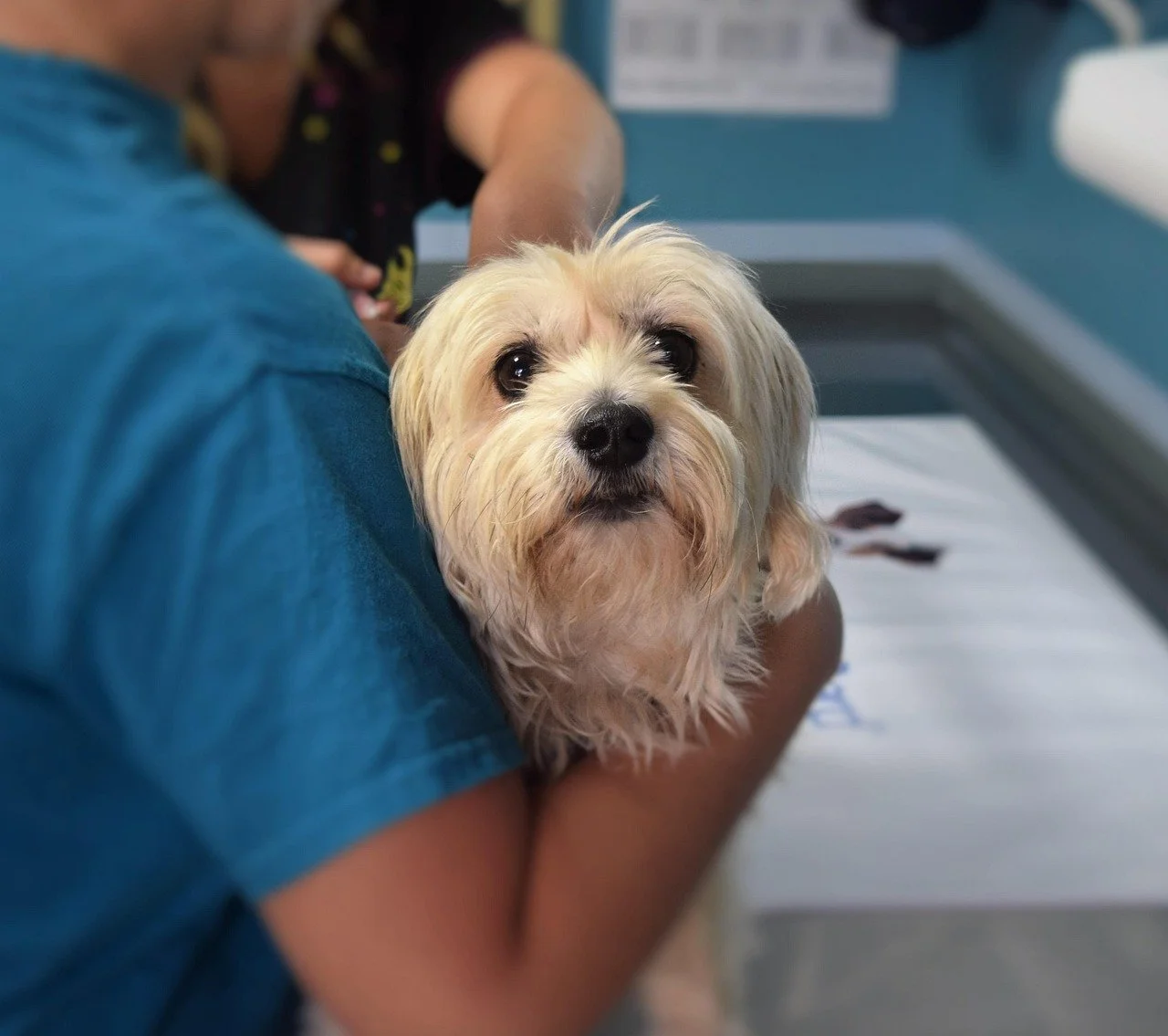
There are ways to save money on veterinary care without compromising their health. A big part of that is preventative care.
Veterinary Care
Veterinary care is one of those big expenses to take into account when you’re coming up with a pet budget. Regular visits are helpful to keep your pet healthy and the cost can be relatively easy to predict. The emergency trips to your vet for illness or injury are more expensive. The trips to an emergency clinic can really break the bank.
It’s a good idea to either invest in pet insurance so you can budget for monthly payments or set aside a little money each month to pay for those unexpected emergencies. While this isn’t possible for everyone, with a little planning, it can usually happen and will help you if the need arises.
I’m also a big believer in wellness bundles. This is a series of tests completed by your vet that can detect illnesses such as heartworm, tick-borne diseases, kidney, liver, and thyroid disease. Catching a disease early can make it easier to treat, less expensive, and potentially save your pet’s life.
When discussing vaccinations and treatments such flea prevention with your vet, there will be options that you can take to reduce costs.
For instance, Hunter is an indoor kitty. He doesn’t roam outdoors through fields and forests. Since Lucy is already being treated for flea and tick prevention, the odds of Hunter getting fleas are slim to none. Any flea that Lucy brings in will soon be dead. So, Hunter doesn’t need flea prevention.
Since Hunter has no exposure to other cats and stays indoors, he doesn’t need the vaccine for the feline leukemia virus.
If we are planning a vacation and Lucy will be boarded at a kennel, she has to receive the kennel cough vaccine. But, frankly, that’s not always the case so she doesn’t get it every year.
Pet Supplies
A good way to save is to shop strategically for items you need. Look for sales or discounts off your pet’s food brand and treats, kitty litter, pet waste bags, and other “consumables” so you can buy them in bulk. Don’t forget to check the expiry dates of products so you don’t buy more product than you can use in a reasonable time frame.
Also, take advantage of loyalty point programs for free food or supplies at your pet stores or anywhere you buy your pet supplies.
If you need gear, check flyers for sales, go to thrift stores or dollar stores, or explore Kijiji, Craiglist, Facebook Marketplace, or Amazon to find better pricing. By planning ahead, you can find some amazing deals.
If you need more toys for your pets to keep them entertained, stick to toys that your pet will like. Piper and Jack loved to play fetch. Balls were the best toys ever.
Lucy will fetch a ball. But, to be honest, she’d rather play tug of war or solve a treat puzzle. So, I won’t bother spending money on balls or fetch toys for her. The ones we have now are plenty to keep her happy.
Also, don’t be afraid to try a little DIY project. Your pet will not care if it’s fancy. Timmins favourite thing to play with was a rolled up piece of aluminum foil. Hunter prefers balls of paper. Lucy loves her tug toy made from old t-shirts cut into strips and braided. Sometimes the simplest toy is the one that makes them the happiest.

Mud Happens
It doesn’t take long for Lucy to find dirt. Luckily, she doesn’t mind a bath.
Grooming
You may need a professional groomer for certain breeds of dogs or cats. But if you have a short haired dog or cat, and can learn a few basic grooming skills, your pet won’t necessarily need to go to a groomer at all.
Dogs will need their ears cleaned regularly to prevent infection, especially those with floppy ears.
Both dogs and cats will need to be brushed and their nails will need to be trimmed regularly. A decent set of pet nail clippers with a built-in guard to keep from cutting their nails too short will help. A soft brush will suffice for short-haired pets.
Short-haired cats will only need a bath if they get into something messy, if they have flea or skin issues, or can’t groom themselves properly due to age, obesity, or illness.
Long-haired cats may need some help with brushing to keep their fur from matting.
Short-haired dogs will need to be bathed occasionally to keep them fresh and clean. But, otherwise, there grooming needs are basic.
Some dogs with short but double layered coats(such as Labradors and Corgis) will also need extra brushing during shedding season but don’t necessarily need to see a groomer if you’re willing to put in the work.
Some dogs have extensive grooming needs as their hair will need to be washed and cut regularly. These dogs will probably need professionally grooming. But you can even help between grooming sessions by keeping their nails trimmed, their fur brushed, and their ears cleaned.
While small dogs can probably be bathed in your tub, a big dog may require more space. In the warm months, a plastic kiddie pool can be used for your bigger pups. In the winter, you can go to a self-serve pet wash. Some are in pet stores or even some self-serve car washes have pet wash bays available.
As an extra little tip, the more you handle your pets to get them accustomed to someone touching their ears, mouths, and paws, and tails, the easier grooming sessions will be for everyone.
Boarding
Taking your pets to kennels for boarding can get expensive.
If there is a friend or family member nearby that is willing to pet sit for you, that will cut down on the expense when you have to travel without your fur family. Be sure to get them something as a thank you for their care!
You can also hire a pet sitting service or private pet sitter to take your pet into their home or to visit your home and care for your pets. While there is a cost, it is often less expensive than a night at a pet hotel and your pet may be more comfortable and content.
Training
Training can be a great way to bond with your pet and as a mental and physical enrichment tool. But we can’t all afford to take training courses.
Instead, try looking online for training courses and videos. Training books can often be found in used book stores and thrift shops. Even your local library can be a good resource for training materials to get you and your pet started on some nifty new skills and tricks.
Conclusion
Sticking to a budget when it comes to pet care is possible. With a little creativity and a little work, we can set a reasonable budget for our pets’ care, stick to it, and still give them the life they deserve.
Is there another way that you save money on pet care?
Leave a comment below and let us know!
