
What to Do If Your Dog Is Sprayed by a Skunk
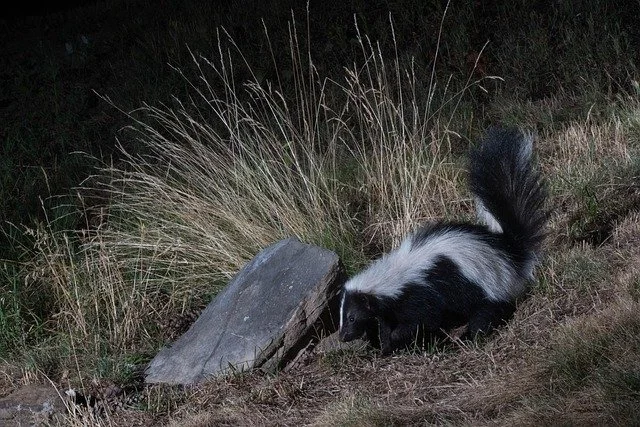
The Offending Character
The skunk is a gentle, non-aggressive and shy creature that holds a very powerful defensive weapon.
Skunks-highly recognizable by their distinctive stripes and their overwhelming scent.
If you’ve ever encountered a skunk, your retreat was probably hasty.
Your dog’s reaction will be quite different. They will be all in, nose first, to check out this new curiousity.
And, then it happens. Your dog gets sprayed by the skunk. Yikes! Now what??
My Dog’s Skunk Spray Story
Back when we had our black Labrador named Piper, we lived in the city, in a single family home with a big back yard. But to get to the yard, we had to go outside through our side door and then through the garage.
One morning, I was letting Piper outside to do her business before leaving for work. We stepped out through the side door into the driveway. Instead of Piper taking her usual beeline to the garage door, she made a swift dart in the opposite direction, towards the front corner of the house.
Before I could even react, she was back, and whipped past me, into the house through the still-open door as I stood in shock.
Then the smell hit. I couldn’t even recognize it as a skunk at first. It was like some sort of chemical bomb had exploded!
As I raced inside to find Piper, I followed the stench upstairs and into our bathroom. I found Miss Piper in the tub, eyes watering and staring up at me mournfully.
I’m still thankful that her instinct was to head to the tub, not the livingroom carpet or the bed!
I wasn’t ready that day for a skunk spray incident.
It took trips to two different stores, with me smelling of skunk enough that the pet store employees smelled me before they saw me.
We got rid of the smell on Piper, my clothes, my shoes, my hands, and the house(inside and out) but it did take a few days.
Now we always have supplies on hand, just in case!
Disclosure: As an Amazon associate, this post contains affiliate links. If you follow one of these links and make a purchase, I may earn a commission, at no extra cost to you. This helps support this blog and my ability to keep bringing you important articles regarding the care and life enrichment of your precious fur kids.
When Are Dogs Most Likely to Get Sprayed?
Contrary to popular belief, skunks do not hibernate. They enter periods of deep sleep in the winter, called torpor, but may emerge from their dens to forage, even in the dead of winter, especially during those brief thaws we sometimes get in mid-winter. So, it’s possible for your dog to have an encounter at any time of year.
However, most skunk encounters will be during dawn and dusk in the warmer months of the year. Early spring can be a particularly active time as they forage for food, seek mates, and search out dens to raise their young.
During the summer months, a skunk will be raising her young. She will often be foraging, mostly from dusk to dawn hours but it’s possible to meet her at any time. She will be very protective of her babies and may be more likely to spray at any sign of danger.
And, at 2-3 months of age, those young ones will develop the ability to spray themselves. This means the risk of getting sprayed is even higher.
In the autumn months, as the young ones go out to find their own winter dens and search for as much food as possible to prepare for the winter, your back yard may look like a great place to make a home.
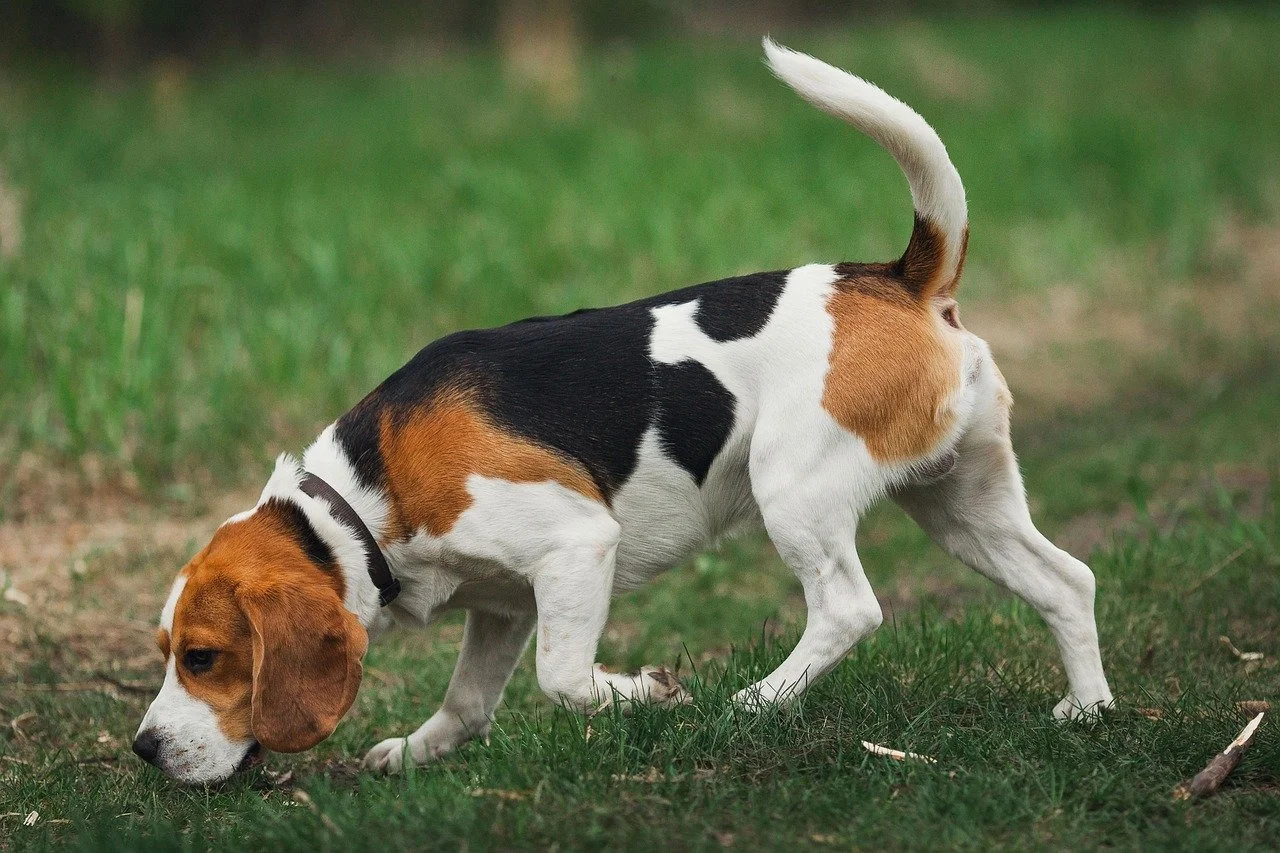
The Nose Knows
Dogs explore their world nose-first and that can bring them right into line with a startled skunk’s defense mechanism, it’s pungent scent.
Why Do Dogs Get Sprayed?
Dogs, famously, lead with their noses. They live in a world where their scent guides them.
So, when a dog picks up the scent of a skunk, their instinct is to swiftly advance, face first, to explore.
While you may pick up on the skunk’s stamping feet, hissing, or raised tail as a warning to back away, it’s very likely that your dog’s enthusiasm for a new scent will overrun those warnings.
It’s the skunks last line of defense but, BOY, does it pack a wallop!
Skunk spray is a yellow oil produced in a skunk’s anal glands, comprised of sulphur-containing chemicals called thiols. They have been described as smelling like rotten eggs or burnt rubber but the complex nature of skunk spray is it’s own special scent. It can be detected in very small concentrations and may linger for weeks.
How Do I Get Rid of the Skunk Spray Smell?
First things first. If you can, keep your dog outside and keep them dry until after you’ve applied the treatment. Wash and rinse your dog only after the treatment is complete.
Keeping them outside will prevent the smell from getting into your house. Getting your dog wet will only spread the oily skunk spray and do nothing to get rid of it.
Pop on a pair of longer rubber gloves to protect your hands from the treatment and from getting the skunk oils on your own skin.
Check your dog’s eyes and if the skunk spray got in their eyes, flush with water or sterile saline.
Now, it’s time to apply a skunk smell treatment…
Your first idea for treatment may be the good ol’ tomato juice. Skip it.
Frankly, while it will disguise the scent for a little while, it doesn’t actually get rid of the smell.
Anyone who tries that remedy knows that every time your dog gets a little damp, for weeks to come, the skunky smell is back.
White vinegar is a better option than tomato juice but still not the best one. Use this recipe instead:
1L 3% hydrogen peroxide(4 cups)
¼ cup baking soda
1-2 teaspoons of dish soap
Mix together in an open bowl or bucket before applying it to your dog immediately. Don’t put it in a sealed bottle or save for later use. It’ll fizz immediately and could cause the bottle to explode.
The hydrogen peroxide and baking soda will do the work to neutralize the odour. The dish soap will help the mixture adhere and will help lift the oily residue from your dog’s fur and skin.
Wearing gloves, massage the mixture into their coat, being very careful to avoid their eyes. Leave the solution on their fur for 5-10 minutes to do it’s magic and then rinse thoroughly.
If you still detect the skunk smell, you may have to repeat the process but one treatment usually does the trick.
Keep in mind that if you have a dark coloured dog, their fur may be slightly bleached by this process so don’t leave the solution on too long. Piper’s black fur was just fine and showed no signs of bleaching but it is possible.
After you’ve finished the treatment and rinsed it thoroughly, go ahead and give your dog a bath with their regular dog shampoo to remove any remaining odour. And, hey, your dog’s wet at this point. You may as well take advantage and give him the full bath experience!
After finishing the bath, towel dry your dog and let them dry in a warm room.
While you’re bathing your dog, be sure to check them over for any bites and scratches. It’s unusual for it to get that far but if the skunk is attacked, it will fight back. Any bites and scratches should be reported to your vet, immediately.
If any of the skunk smell gets on your clothes during the bathing process, wash your clothes in regular laundry detergent, boosted by ½ cup of baking soda or get a skunk odour remover that works in washing machines.
For getting rid of any lingering smells, I particularly like ez-clean Odour Remover for cleaning fabric and surfaces in your home.
It’s a bio-enzyme cleaner that can be used full strength or diluted down for use for skunk spray smell (or many other pet smells) on your pet or throughout your home(inside or out) and in your laundry.
You can use it full strength on your dog’s fur if skunked, but I still recommend the homemade remedy for a quick and fully effective approach.
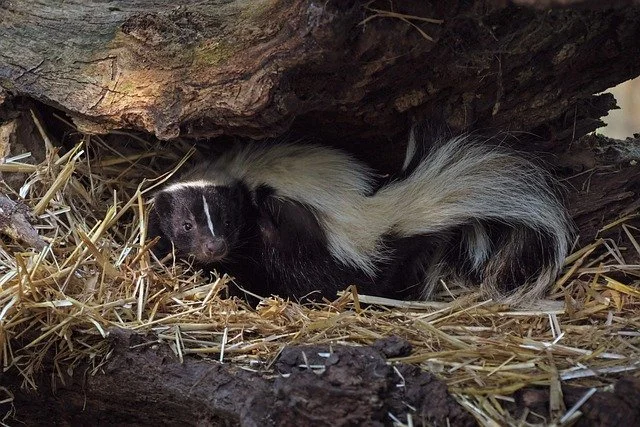
Prevention is Best
Keep your dog from getting sprayed in the first place by making your yard less attractive and less accessible to these smelly little critters.
How Do You Prevent Your Dog Getting Sprayed by a Skunk?
Avoid letting your dog out to free roam in your yard from dusk to dawn, as these are the peak hours for these little nocturnal creatures.
If you’re letting your dog outside at night into your yard, turn on a light or flashlight and make some noise to give skunks plenty of warning to slip away.
Remove food sources like pet food, open compost bins, garbage bins, and fallen birdseed.
Block access to area under sheds and decks or porches and remove piles of brush and loose woodpiles that they may hide in for shelter.
Keep your dog on a leash on trail walks, especially in areas where skunks may linger such as heavy brush in wooded areas.
Conclusion
It’s easy to keep a few supplies on hand to treat your dog if it gets skunked, just in case. I highly recommend keeping them handy with your pet first aid kit for emergencies.
But, even better, you can avoid your dog getting sprayed in the first place with a few preventative measures.
Skunks are generally docile creatures with poor eyesight and limited climbing abilities. They will only spray as a last resort if startled, cornered or attacked. Keeping your dog away from a skunk in the first place may prevent a lot of suffering on the part of both you and your dog.
