
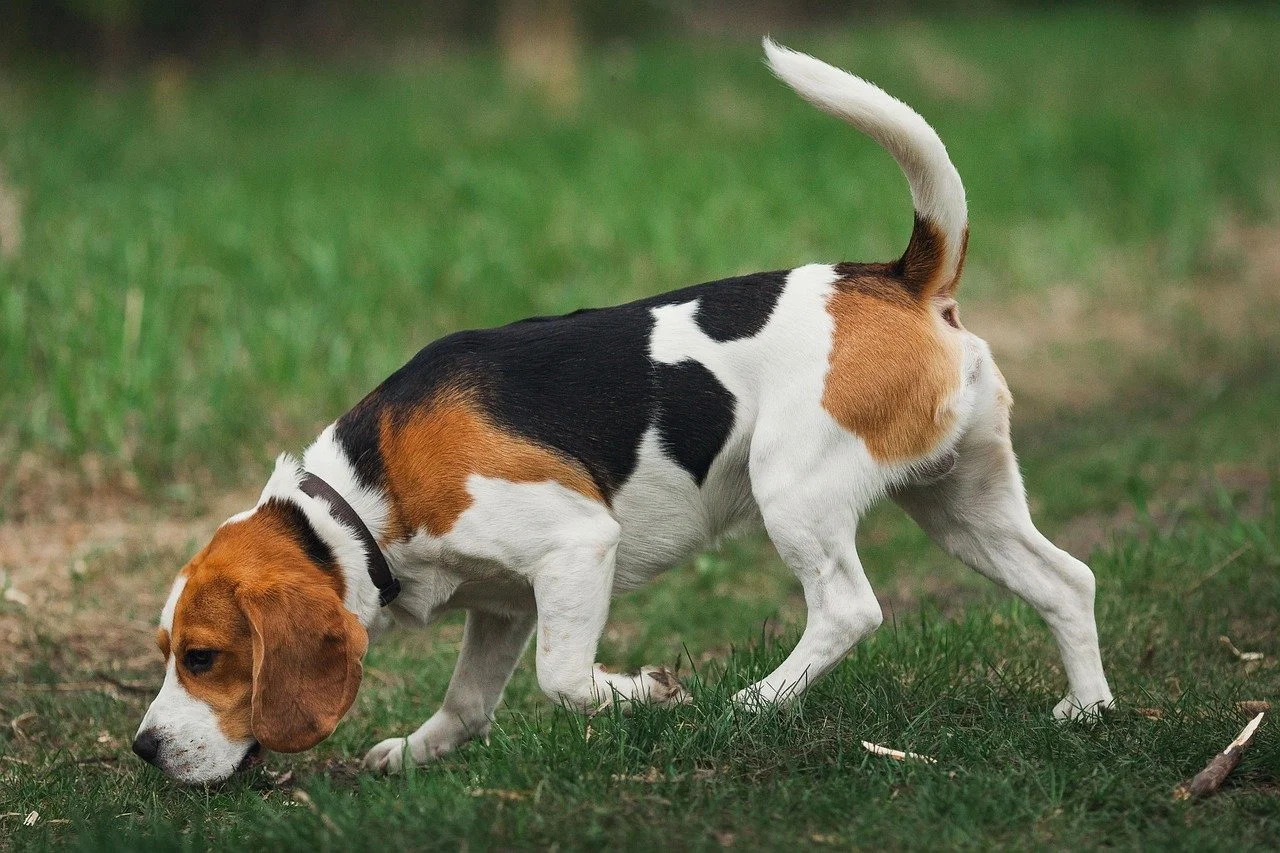
A beagle “reading the news” of the neighbourhood.
Picture it.
You take your dog out for their morning walk. You have a route to follow and they have business to do. But at each lamp post, you have to urge them along as they stop for a sniff.
Every landmark becomes another place for your dog to slow you down.
You’re trying to get them to be physically active and eliminate, and all your pup wants to do is stop and smell the flowers.
But, what if I told you that your dog desperately NEEDS this sniff fest?
What if I told you that a dog that is able to exercise their sniffer will be an overall happier and healthier dog?
What if I told you that you could cut your walk time or at least make it a much more efficient journey to a physically, mentally, and emotionally satisfied pup?
Wouldn’t you want to know how to make your pooch happier and healthier with one simple trick?
Read on to find out how!
Your Dog’s Nose Knows!
A dog’s nose is an amazing thing, indeed! In reality, your dog’s entire olfactory system is a marvel that makes a dog’s sense of smell it’s biggest asset in terms of their senses, by a landslide!
Humans have about 5 million scent receptors. Pretty good, right?
Dogs, however, depending on size and breed, have anywhere between 125 million to 300 million scent receptors. That’s a lot of sniffing power.
On top of this, dogs dedicate about 40% more of their brain to analyzing scents than humans. It takes a lot of brain power for our dogs to process all those odours their noses detect.
They even have specialized anatomy to capture as many scents as possible.
A unique shelf inside the nose captures odour molecules for analysis.
They have nostrils that can move independently to pinpoint the exact direction of a scent.
When a dog exhales, they have side slits on their noses that create swirling air currents to pull in fresh odour molecules.
Also, they have a special organ in the roof of the mouth, called a Jacobson’s organ(Vomeronasal organ), that detects pheromones for social or reproductive cues.
Dogs are extraordinary smellers. They’re built to smell. They use these odours to learn all about their surroundings. They can track scents over miles, up to 40 feet underground, specific items such as drugs, bombs, and contraband food, and even detect medical conditions such as low blood sugar, seizure onsets, or even certain types of cancer.
Your dog can smell your emotions. This is why a dog always seems to know when you’ve had a bad day and need a friend. They can, quite literally, smell your sadness. And they can also sense your joy and will respond in kind.
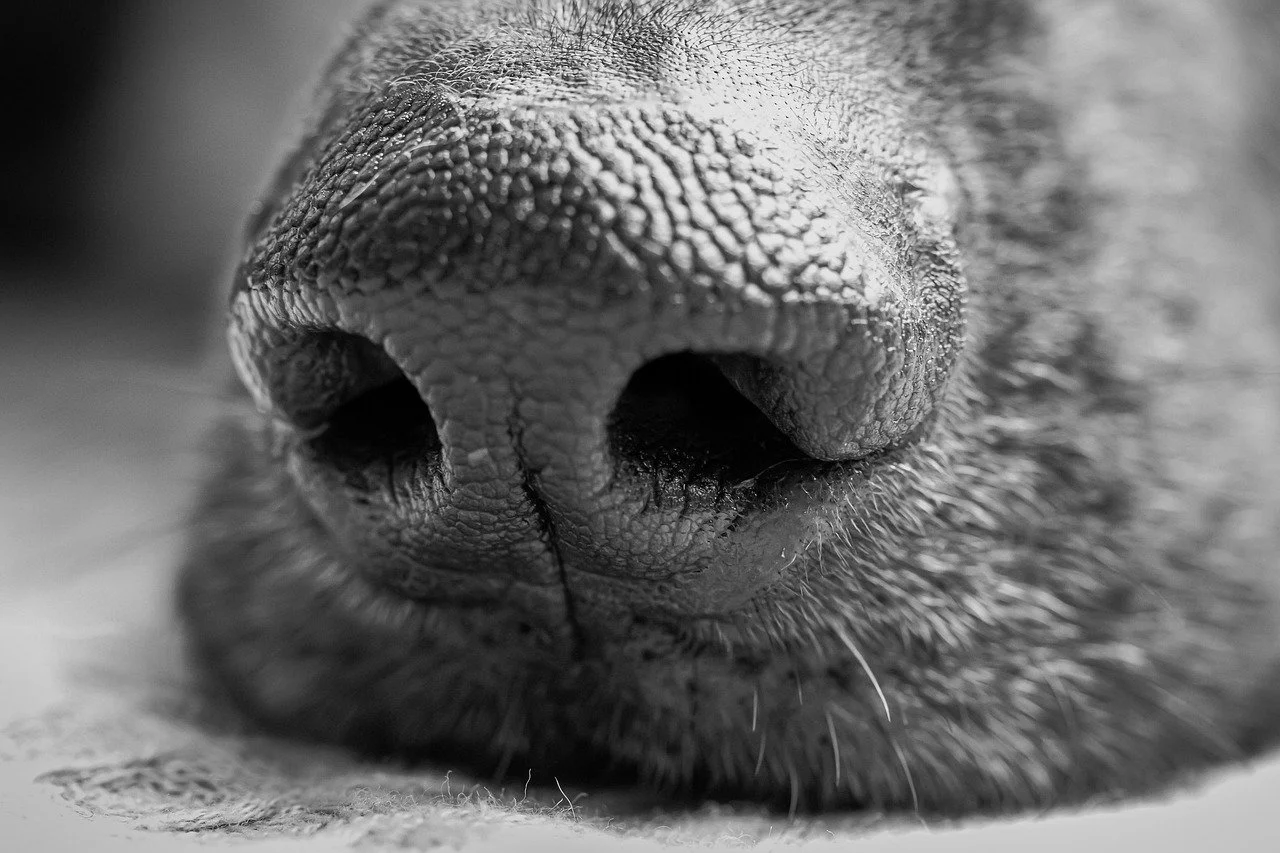
A dog’s nose is built for immense scent detection!
Benefits of a Good Sniff
It’s hard for us to imagine how important scent work is for our dogs. It taps into their most powerful biological tool and is a huge enrichment activity for your pup.
Just 10 minutes of intense sniffing is equivalent to a 30 to 60 minute walk for your pup, in terms of mental stimulation and energy expenditure. Combine the two and you’ve got the perfect tool to provide both a mental and physical workout for your canine companion.
Scent work is a strong cognitive task. With your dog’s ability to process smells, it's a fantastic way to give your dog a mental workout. This can prevent boredom and keep your pup’s brain in peak condition.
A sniff walk can even have a calming effect on your dog. It can reduce stress hormones and help lower their heart rate and blood pressure. Think of it like meditation for your furry friend!
Mood-elevating endorphins and dopamine are released, making your dog not only mentally and physically stimulated, but emotionally satisfied.
Also, spending your time exploring with your dog and allowing them to lead you on their scent journey is a good opportunity to bond with your pup. Focusing on their need to explore with their nose builds their trust in you and will allow you to see a whole side of your furry friend that you may never have considered.
How To Take Your Dog on a Sniffari
To take your dog on a sniff walk, or sniffari, you will need to let your dog lead the way and be prepared to be patient with them to let them fully explore with their nose.
If your dog is the type to pull at their leash to get to the next scent, you can use a standard leash with a harness, or one longer than normal, up to 10-30 feet long, or even a retractable leash, to give your dog plenty of freedom. Just be sure to follow leash manners and be ready to engage and control your dog if necessary to keep them safe.
Some dogs prefer to dawdle along and linger in one spot. You won’t need a particularly long leash for this type of sniffer, but you will need plenty of patience. Give them the time to fully explore each scent. Don’t rush them along. Just let them breathe.
Remember, if your dog normally walks for 30 minutes to an hour, you may be able to spend just 10 to 15 minutes on a sniff walk for your dog to get the full benefits. Just allow them to fully explore with their nose and you’ll learn to recognize when they’ve had enough.
As for location, you can certainly use your regular neighbourhood route. But a better option would be a park, an open field, or a hiking trail, with as few distractions as possible. A change in scenery will also give your dog a whole new set of scents to explore as they learn all about this new area.
Keep in mind that every walk doesn’t have to be a sniffari. You can do a regular walk in the morning and a sniff walk in the evening. You can take them for their regular walk but give them some time to sniff as well.
Lucy loves to follow her nose on a walk. But if I allow her to take in all the scents she desires when we first start walking, she often settles down after about 10 minutes of sniffing and just enjoys the rest of the walk. So, I often allow her to spend the first portion of our walk having a full-on sniff fest and then we can cover more ground for the rest of the walk.
She comes home both mentally and physically satisfied and ready for a long, relaxed snooze.
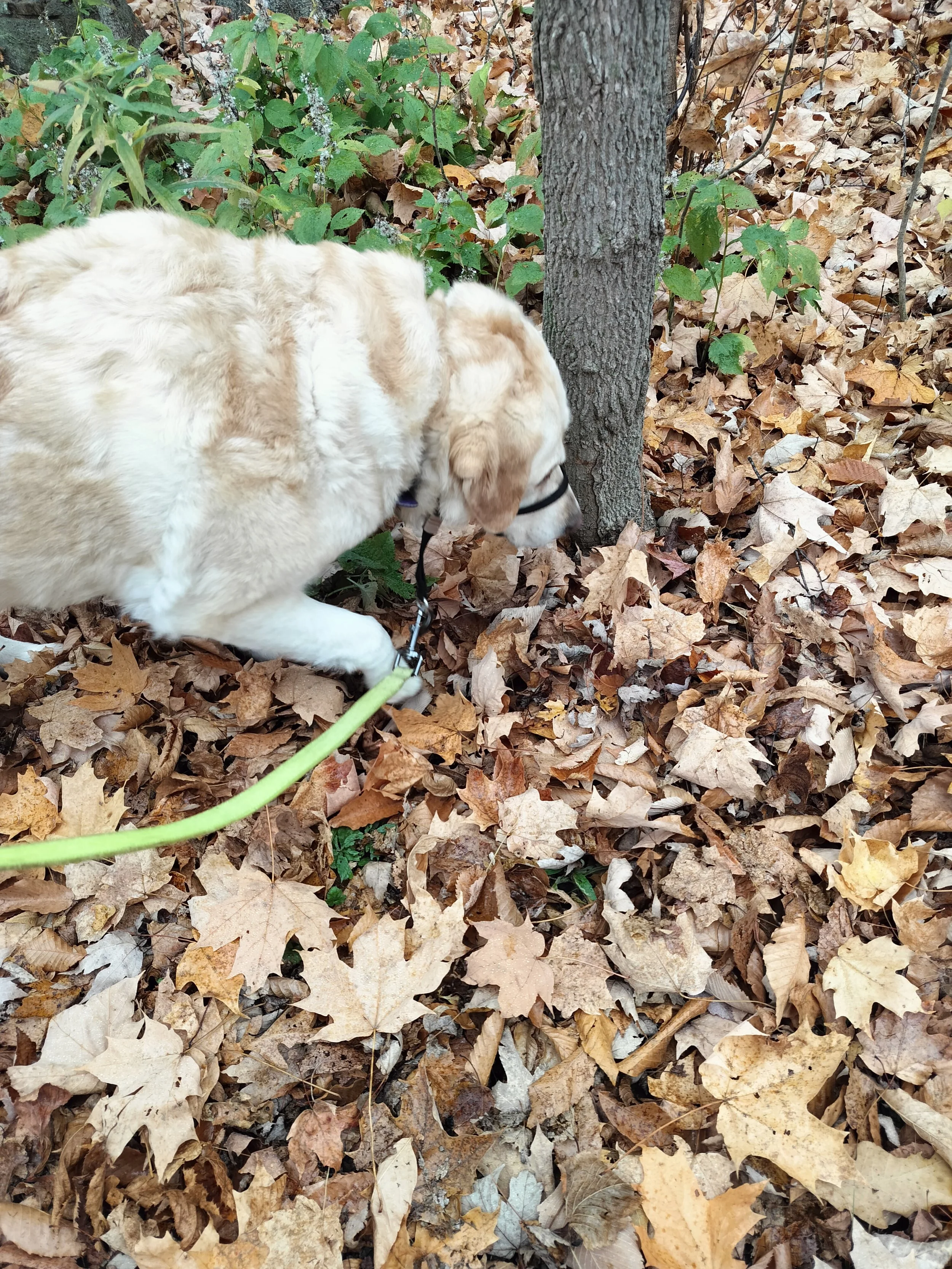
Lucy on sniffari!
My dog loves to spend the first 10 to 15 minutes of her walks in full sniff mode and we’ve learned to accommodate this need for her well-being.
A Sniff for All Seasons
Even for humans, different seasons can bring different scents to the air. Blooming flowers, fresh cut lawns, the smell right after a rain, and the scent of fallen leaves on the muddy trail beneath our feet, and even freshly fallen snow. Imagine what it must be like for your canine companion!
They can detect every little change in their surroundings. Seasonal changes bring new wildlife, new plants, even new people and pets to the area. Your dog will be able to get a variety of scents, just with the changing seasons.
Spring- Spring is perhaps the best season for sniff walks. Moisture from melting snow and Spring showers creates enhanced humidity, which traps scent molecules for your dog to inhale. With animals waking from hibernation, birds migrating, and even insects emerging, your dog can explore so many new scents. Fresh greenery and blooms providess even more scents for your dog.
Summer- Summer is the peak for both flora and fauna, giving your pup so many scents to track and explore. Many people and their pets are outdoors, leaving behind a complex set of olfactory delights for your dog.
A sniffari is best done early in the morning, late in the evening, or after a cooling rain. Damp, cooler air is your dog’s friend when it comes to scent exploration because moisture captures and enhances scent particles.
Autumn- Because Autumn is usually cooler and damper, this is a good season for sniff walks with your pup. The fallen leaves and flurry of animal activity as they prepare for Winter provides a shifting array of scents for your dog to enjoy.
Dying plants in neighbourhood gardens and parks, migrating birds passing through your area, cool, damp earth, and even frosty air, can add a whole other level of scents. Just be sure to keep your dog away from any dangers such as mushrooms and sharp objects in leaf piles.
Winter- While Winter may not seem like the ideal conditions for a sniff walk, you can still take advantage of this season. The snow actually captures new scents and keeps them close to the surface. The crisp, frosty air makes scent particles linger, making the scents sharper and more intense, providing a completely different experience for your pooch.
They can also get more out of a shorter walk that may be necessary in the extreme cold if you allow them to take in all the scents. Just be sure to dress both you and your pet appropriately and protect their paws from the ice and snow.
And, if the weather is particularly awful, such as during a blizzard or ice storm, indoor scent work, using hidden treats around the house or a snuffle mat, can still satisfy your pup.
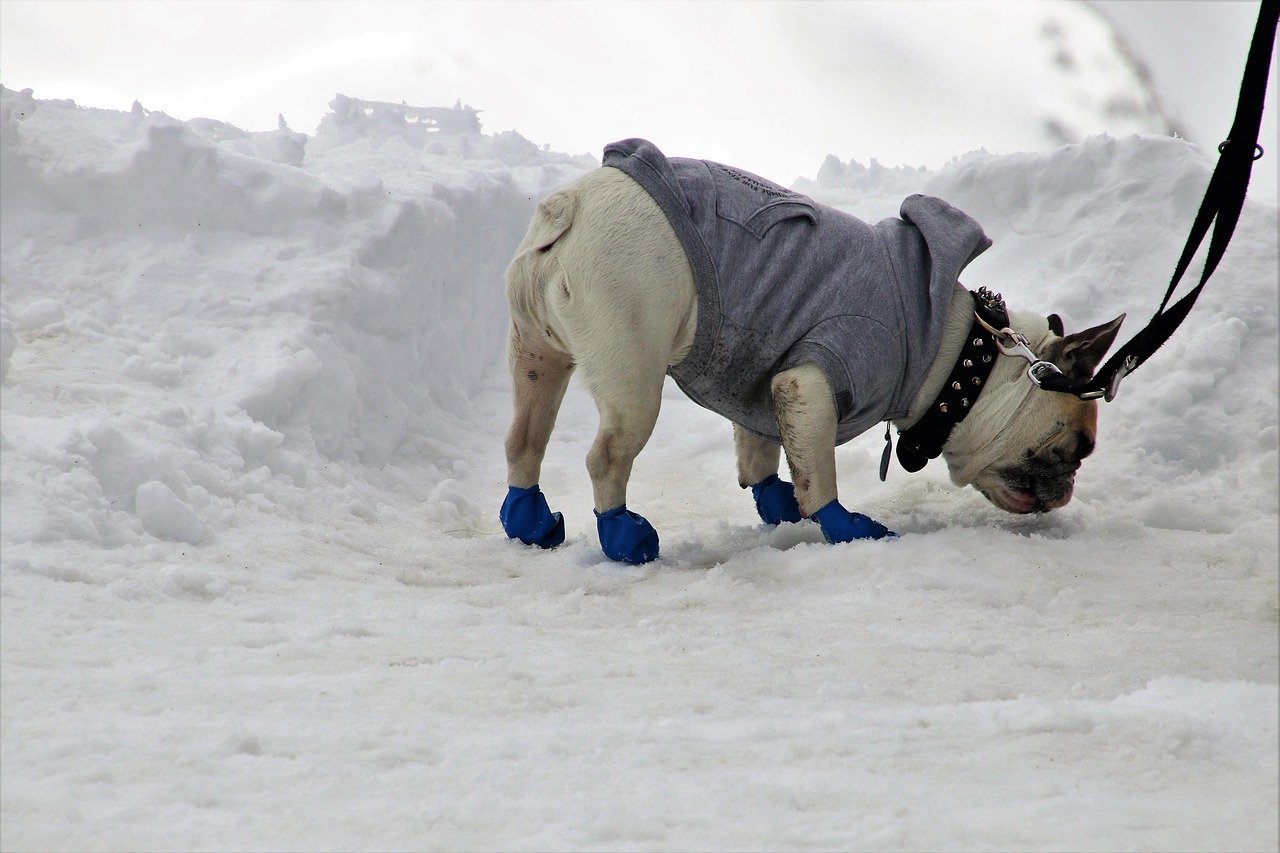
Winter sniff walks are fun too!
With their flatter faces and blocked nasal passages, pugs are not known for a strong sense of smell compared to say, a bloodhound. But even a pug can enjoy capturing those scent molecules trapped on the surface of the snow!
Summary
Dogs are biologically created to capture and process scents as their primary source of information about their surroundings.
Dog sniff walks are physically, mentally, and emotionally important for your dog’s over-all well-being.
Taking your dog on a sniffari requires patience but also gives you an excellent opportunity to bond with your canine companion.
You can do dedicated scent work with your dog or combine it with a regular walk to give your dog a fully enriching experience.
Use new locales, new terrain, and varied routes to expose your pooch to as many scents as possible.
Take advantage of the changing seasons to give your pup an ever-changing variety of scents to process and enjoy.
While we, as humans, may not smell all they smell, we can take slow, deep breaths to enjoy some of the scents our dogs enjoy and capture a little of the experience right along with them!
Related Articles:

Ways to physically and mentally enrich your pet’s life.

Enrich your pet’s life with these tips and tricks to keep your pet engaged and having fun!
