
Dog Urine Lawn Burn: How to Prevent and Fix It
Is your lawn turning from a lush carpet of green to a patchwork of big yellow and brown polka dots?
You love your pooch and you know a dog’s gotta go…but your poor lawn is suffering, big time!
Is this just one unfortunate part of having a dog??
It doesn’t have to be that way.
So, let’s take some steps to fix our lawns and then work on preventing the burn in the future.
Discover how to identify dog urine lawn damage, how to fix it, and how to prevent it.
Disclosure: As an Amazon Associate, I may earn a small commission, at no extra cost to you, if you click a link and make a qualifying purchase.
What Causes Lawn Burn?
Lawn burn from dog urine is due to the lactic acid, urea(which is a form of nitrogen), and soluble salts in the urine. While nitrogen was thought to be the main cause, lactic acid has been discovered to be the primary culprit, acting as a powerful herbicide.
While too much nitrogen in one area will burn the grass tips, the lactic acid actually breaks down the cellular membranes of the grass blades.
Dogs that squat to pee, including most female dogs and some male dogs, concentrate the urine stream into one area, causing a more concentrated area of damage.
How to Spot Dog Urine Damage
If your lawn has brown or yellow spots, often with darker green ring around the edge of the damage, urine damage is likely to be the cause.
The darker green ring on the outer edge will be due to the nitrogen acting as a fertilizer as the concentration decreases further out from the center.
To tell the difference between grub or fungus damage and urine burn, try to pull up some of the grass. Both fungus and grubs cause the roots to be weakened and the grass will pull up easily. With urine burn, the roots are still strong.
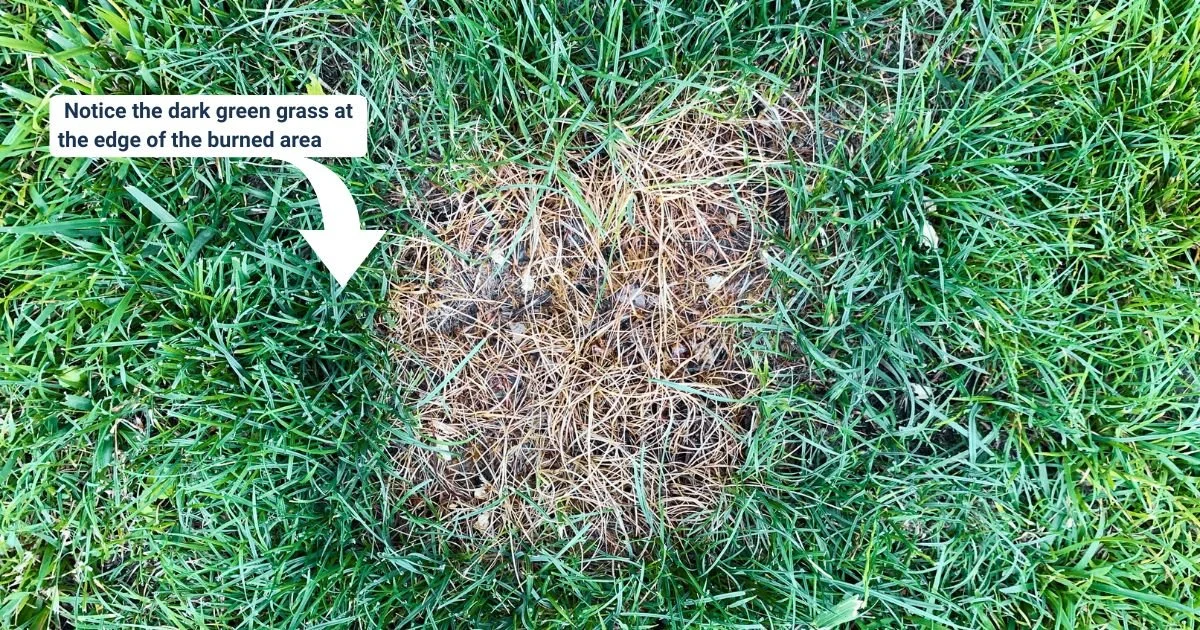
A typical photo of the damage caused by dog urine in your lawn
How to Prevent Lawn Damage Caused by Dog Urine
1) Dilution
There are actually two ways to dilute the urine before it prevents damage to your lawn, both directly and indirectly.
Keeping your dog well-hydrated will both keep them healthy and will dilute their urine to a certain extent. However, this will only help to a certain degree. A well-hydrated dog is fantastic. Just don’t count on it to save your lawn.
You can dilute the urine by using a water hose or watering can to dump water on a spot where your dog has peed.
If you find that there is a strong urine smell, as there may be in the heat of Summer, you may consider using ez-Clean Yard Odour Remover. This is an enzyme-based spray that can be hooked onto your garden hose and will break down the urine components. This can both prevent lawn damage and get rid of the odour.
2) Lawn Maintenance
A healthy lawn is a good defense against dog urine burn. The more healthy your lawn, the more resistant it will be to damage in the first place. That means keeping your lawn watered, if possible, and keeping it aerated, dethatched and fertilized.
To help your lawn, raise the height of your mower so your grass and the soil beneath it can retain as much moisture as possible and to encourage strong root growth. This will reduce the need for watering your lawn and keep it from getting scorched in the heat.
If you need to overseed your lawn or patch spots, choose dog urine tolerant and drought tolerant grass species such as tall fescue, creeping fescue, perennial ryegrass, or Kentucky bluegrass in cooler climates and Bermuda grass, centipede grass, or Zoysia in warm climates.
You may also choose groundcovers such as micro clover or white Dutch clover, creeping thyme, or Labrador violets.
3) Dog Training
The best method to prevent dog urine damage in your lawn is to train your dog not to pee on the lawn in the first place. Set up a potty area and train dog to go there.
If your dog is naturally choosing an area to do their business in a corner of your yard that works, set it up there. For more ideas on setting up a pet-friendly yard, including a potty area, check out the article, “Creating a Pet-Friendly Backyard and Garden”.
If your dog is currently using an area in you’d prefer they not use, such as peeing close to your house entrance, you will have to train them to go elsewhere.
If your dog prefers the feeling of grass under their feet to do their business, as some do, you may want to sacrifice a hidden area of lawn or give them an artificial turf area. This is where your water hose and enzyme cleaner will really help.
Train them by taking them out on leash after a meal or when they would normally go and directing them to the new potty area in your yard.
Encourage them to do their business in this area. When they do their thing, give them a reward treat and plenty of praise to reinforce it.
If they veer off course, gently redirect them with the leash to the potty area.
It may take them a while but just be consistent with using the leash to direct them and keep the praise coming.
Honestly, if you have to follow them around to spray water after them, why not spend that effort training them to go to a certain area in the yard instead?
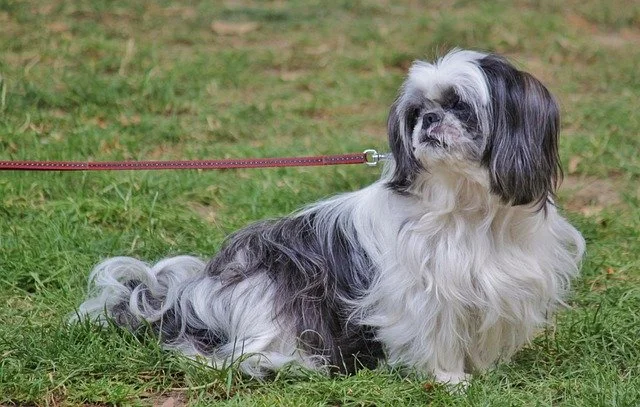
You can train even your adult dog to go to a designated potty area to do their business
Some people will say that you can change your dog’s diet, perhaps switching to a homemade diet. If you’re interested in trying this, speak to your veterinarian first to make sure that your dog’s nutritional needs are met and that the switch is done gradually.
Also, if you’re taking this step just to fix a lawn issue, you may not find it worthwhile. If you want to go that route for the health benefits to your dog, and your lawn does show improvement as a side benefit, that’s great.
How to Fix Dead Lawn Spots
Best case scenario, your dog will learn to go to your designated potty area and will continue this practice.
But, in the meantime, you may have some dead spots to fix or some new ones that pop up here and there.
If it’s a new spot that has just started to yellow, water the area down right away and thoroughly to try and save the grass.
If you need to fix a patch, rake out dead grass and scratch up the soil to get good soil contact for your seed. You can use a product such as Scott’s ezSeed or a dog urine and drought tolerant grass seed or groundcover seed, as listed above, mixed with topsoil.
Keep the area well-watered, protect it from your dog, and it should recover in a short amount of time. The grass colours may not match completely at first but will eventually blend, especially if you end up overseeding your whole lawn as well.
Summary
If you have an issue with dog urine burn in your lawn, there are options to protect your lawn without sacrificing your dog’s fun time in the yard.
Solutions for dog urine lawn burn include dilution of the urine, training your dog to go potty in a designated area, planting dog-urine tolerant grass or groundcovers, patching dead patches, and maintaining a healthy lawn that can stand up to the wear and tear of your pup.
A perfectly manicured lawn may not be possible where dogs hang out and play. Let’s face it, you’re not going to have a perfect golf course in your back yard.
But you can have a healthy lawn and a happy dog. And that sounds like a win-win to me!
