
Cat Food vs. Dog Food: Seriously, What’s the Difference?

Sharing is Caring
If you’re lucky, you will have a dog and cat that will live in harmony and share everything. Well, maybe not everything.
When it comes to food, your cat and your dog shouldn’t share…but why?
If you have both feline and canine companions in your life, you may have wondered why you need to buy a different kind of food for each of them. It would be so much simpler if there was a diet they could both enjoy, wouldn’t it?
But, the truth is, dogs and cats have different nutritional needs, even if they’re the same size.
Why can’t dogs eat cat food?
Why can’t cats eat dog food?
Is there any food that you can feed to both cats and dogs?
Let’s find out…
Disclosure: As an Amazon Associate, I may earn a small commission on qualifying products, at no extra cost to you, when you follow my links and make a purchase.
Cat Nutritional Needs
Cats are obligate carnivores. This means that they must eat meat, not only to thrive, but to survive.
Obligate carnivores need high levels of animal proteins and fats in their diet to provide essential nutrients, such as taurine and arginine, as they can’t synthesize these nutrients from plant sources.
They even have specialized teeth for shearing meat and a shorter digestive system that isn’t designed for the longer time period that it takes to break down cellulose in plant material.
While they may consume a small portion of plant material for fibre intake, cats need less than 10% of their calories to come from carbohydrates to thrive.
Without meat, cats may suffer malnutrition causing heart disease, liver disease, skin and coat issues, digestive issues, nervous system problems, and immunity suppression.
They need higher animal protein and higher fat content in their food than a dog food will provide.
While the occasional taste of dog food isn’t going to harm them, a regular diet of their canine friend’s favourite meal is going to cause them a great deal of harm.
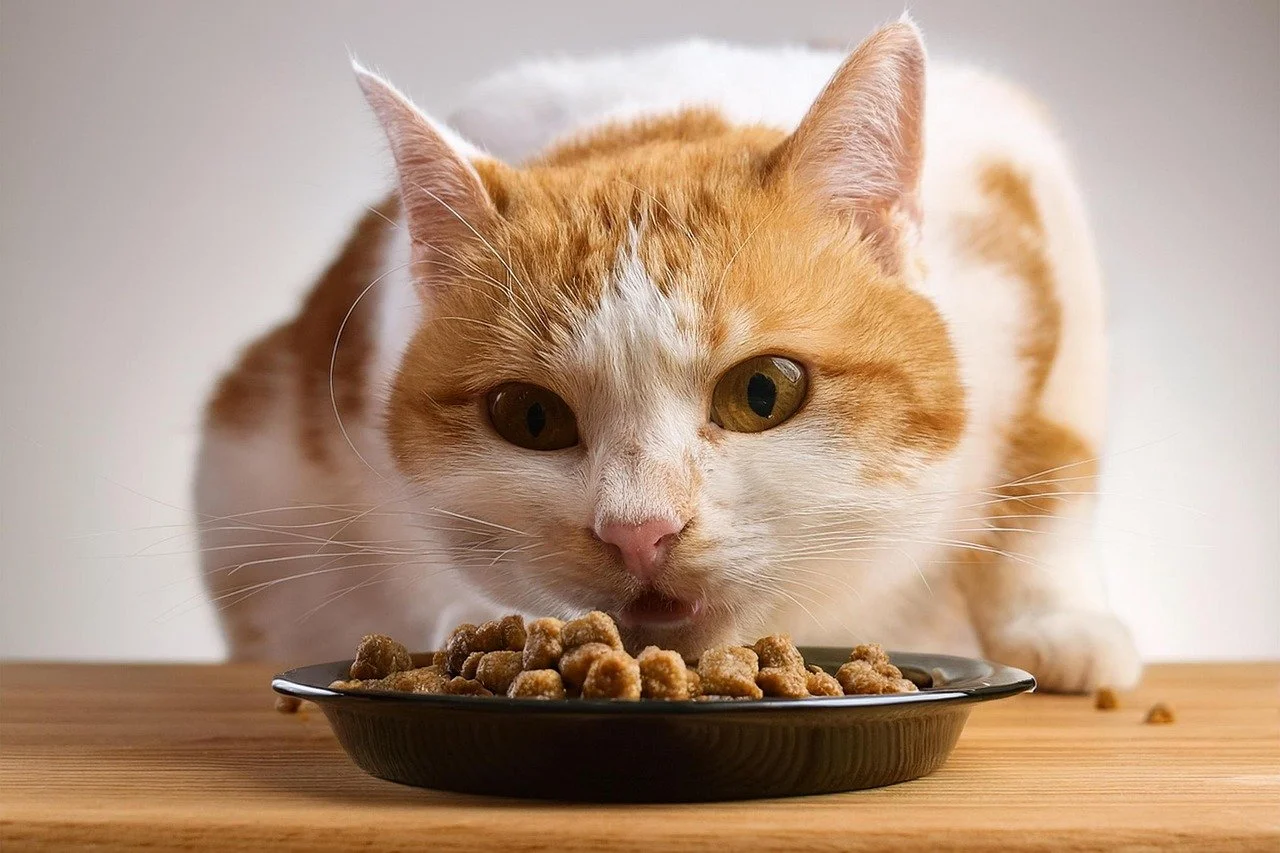
Chow Time
Cats need higher amounts of animal proteins in their diet to give them all the nutrients they need to thrive and live a healthy life.
Dog Nutritional Needs
Dogs, on the other hand, are considered facultative carnivores(or opportunistic omnivores). They primarily eat meat but can also utilize plant-based nutrients for survival.
While they have the meat-shearing teeth of a full carnivore, their digestive systems can process a more varied diet than obligate carnivores. This means that they can get a small portion of their nutrients from non-meat sources and still thrive.
As such, most dog foods will contain a higher percentage of calories from plant materials such as grains, berries, and vegetables as a source of energy, essential nutrients, and fibre. Some dog foods also contain plant-based protein such as that found in yellow peas, soy, lentils, and quinoa.
If your pooch manages to get into a bowl of cat food, it probably won’t harm him(unless your kitty takes offense), but she may suffer some upset stomach as cat food is richer and fattier.
On a more regular basis, your dog is prone to digestive issues, pancreatitis, obesity and nutritional imbalances that can cause a whole host of other issues for your pup.
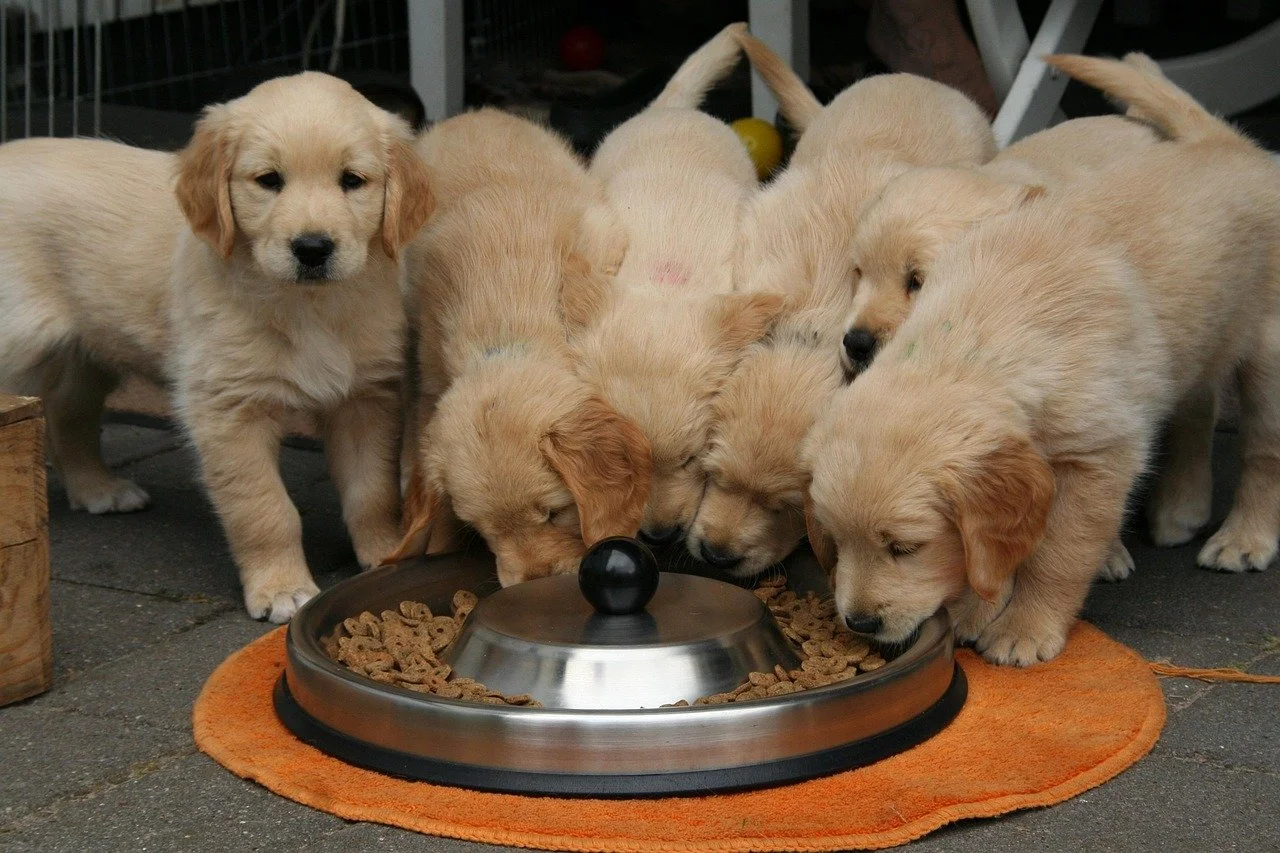
Feeding Time
Even puppy food, with it’s smaller kibble size and higher protein content, is not suitable for a cat’s diet. It lacks essential nutrients and may contain plant-based proteins that are suitable for growing puppies but not for cats.
What About Treats?
Cat treats tend to be smaller, softer, and higher in protein, fat, and calories than dog treats to match the nutritional needs of each pet. They may also rely on intense flavours like salmon or tuna to entice picky eaters.
Dog treats are typically larger, and crunchier than cat treats, although, with the many sizes and breeds of dogs, this can vary dramatically in the dog treat market.
Let’s assume that treats are generally going to be used as “treats” and not as a substantial component of your pet’s diet.
The occasional piece of dog treat given to a cat isn’t going to harm them if it’s small enough for them to chew.
The occasional cat treat offered to your dog as a high value reward for training or enticement shouldn’t be an issue.
Our old dog Piper escaped our house(by jumping through a glass window-but that’s another story) and our neighbour enticed her into his backyard with a can of cat food and some cat treats. Nothing like smelly can of food and a tasty tuna dessert to bribe a Labrador who has just found a taste of freedom.
But Wait, There’s More!
If you’d really like to share a treat with both your feline and canine pals, there are options. Single ingredient protein treats can be easily used as special treats for both species. Here’s a few examples of excellent choices for your pets:
-Crump’s Natural Mini Trainers Freeze Dried Beef Liver-though these are marketed as dog treats they are suitable for both cats and dogs
-Caledon Farms Freeze Dried Lamb Bites-ideal for pets with sensitive stomachs or food allergies
-Balto Bites Freeze Dried Chicken Hearts-these can be broken into smaller pieces to use for smaller dogs or cats
-With Love and Fishes Premium Dehydrated Sardines-for your fish lovers, these single ingredient, high value treats for cats or dogs by The Grandville Island Pet Treatery might just do the trick.
-Great Jack’s Freeze Dried Turkey Treats-another single ingredient treat that can be given to dogs and cats
-Pawsitively Canadian 100% Wild Salmon Dehydrated Treats-rich in omega-3 fatty acids, these treats are for dogs but can be broken or cut into small pieces for cats or smaller dogs
You can also use cooked eggs(no seasoning), plain popcorn, berries, sweet potato, pumpkin, carrots, green beans, plain yogurt or peanut butter(plain, no salt or sweeteners, especially Xylitol which is very toxic). These treats can be used as single treats, as stuffers in food dispensing toys, or spread onto lick mats to extend the pleasure for your pets.
Remember to keep these foods as a little treat only and ensure that you’re not overdoing it with the calories and carbs.
Conclusion
Cats and dogs have quite a few differences and their nutritional needs are no exception. It’s very important for the health of your pets to ensure you’re giving them a diet that will meet those needs to keep your pets happy and healthy for as long as possible.
But if you want one thing that you can use for both species, single ingredient animal proteins are an excellent option to use as treats, training tools, and food toppers.
While their main diets are different, they can enjoy these fun little treats together.
